

Mother Earth is Calling Us Through Water
Spread this Valuable Information
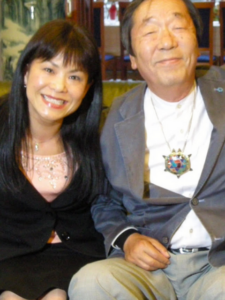
Michiko Hayashi, is Global Director of EMOTO PEACE PROJECT. She worked closely with Dr. Masaru Emoto for over 10 years. Dr. Emoto, the famed author of world best-seller “The Message from Water” and “The Hidden Messages in Water,” requested she continue his work. Hayashi is the successor of his legacy and she lectures all over the world.
Click Here To Read The Video Transcript
Gina: The Hydration Foundation is just deeply honored to have Michiko Hayashi from the Emoto Peace Project join us at the Hydration Solution Summit. And we are a very reverent for the work of Dr. Emoto and the way his beauty, the photographs that he did of water crystals, cracked open a whole new way to think and look about water for everyone around the world. And so, we want to support his ongoing projects and we have Michiko here today to share how she is advancing the work that she inherited from him, he gave her to do, requested that she did. So, we’re here now in support of Dr. Emoto’s efforts and his beautiful new presenter of his work, protector of his work, and advancer of his work.
Welcome, Michiko.
Michiko: Well, thank you so much, Gina. It’s my honor to be here. So grateful to be here. Thank you so much.
Gina: You look so beautiful right now. It’s wonderful to see.
Michiko: Well, I’m here in Los Angeles and in the morning time, you have the beautiful sun coming in. So, yes.
Gina: So, the water inside of you is being activated.
Michiko: Yes, yes, being activated, being brilliant and so happy.
Gina: Yes.
Michiko: Thank you.
Gina: I know you’re in Los Angeles to present a workshop. So, I have to hear what your workshop is, how it relates to the Emoto Peace Project and how did it go.
Michiko: Okay, I had one presentation yesterday in Spanish and one workshop in English. And the title was Water Memory Connected to Consciousness.
Gina: Yes.
Michiko: And it went really well. People really appreciated it because a lot of people have known about Dr. Emoto’s work. Some people did not know but even though they knew about Dr. Emoto’s work, it’s been like 5, 6, 7 years since they have heard about that. And one thing that was really good was that my presentation reminded them how water has memory and deeply connected with our thoughts, our consciousness, and words, what we use daily, action we make every day in every single second is our choice. So, depending on what kind of choice we make, our water is responding to whatever we choose. So, at the end of the workshop, everybody was really grateful that they decided to choose the right words, right thoughts, to be loving, to be happy, to be kind to others. So, it was very nice. Thank you so much. And then, from there, I explained about the Emoto Peace Project of course, about children’s books and how this book is made up and this book is not only for children but for all people because even Us adults can learn so much from that book
Gina: Yes, you’re making water have not only a memory but a future. And I would love to have you explain what the Emoto Peace Project is now, in what iteration, you’re passing on the work that Dr. Emoto had done in the form of a children’s book and how you go about that process?
Michiko: Okay, thank you. Dr. Emoto started the Emoto Peace Project in 2005. At the United Nations in New York, he said that the world really needs to learn about water, because people don’t know about the truth of water, so the world is having conflict, everybody’s having problems but once we learn about water, then people will be living in harmony and in love and gratitude. So, he made this children’s book, I’m sorry I don’t have it with me right now, but this children’s book explains how the earth and also the humans are almost made up with water and how water makes beautiful water crystals when water is exposed to anything – music, words, picture, consciousness – because everything is vibration. That means energy. So, he shows many different kinds of water crystals – music, words, picture, consciousness. And love and gratitude is the most beautiful crystal that water makes. So, after making this picture book, he started to distribute it all around the world to children for free of charge. And I continue to do that along with presentations, seminars, workshops or small group of people or visiting children’s schools, universities, wherever we are asked to come.
Gina: So, first of all, you go where you’re invited.
Michiko: Yes.
Gina: The insight I had while you were talking is in a way the crystals are a word. They’re the manifestation of the water changes states and it becomes a word and it becomes a visual expression. So, we know from the science that Dr. Pollack has done and that other physicists, especially the work coming out of, I forgot the name, the Florence Academy that is doing the work on coherent water.
Michiko: I heard that. Yeah, yeah, I was there when he was doing this.
Gina: Yeah. And water has shape and it becomes permanent in crystals so that in a way it’s the invisible waves turning into a material reality. And I don’t think people are so aware of water’s capacity. They know water as the translating essence.
Michiko: I love the term translation with essence. I think it’s exactly what that is. And people don’t even think about water as being all different. A lot of times we think from the outside when we look at the water, all waters look the same from outside but it really changes the form. And we are transmitting that, giving that energy to water and the water is so pure that it changes the forms accordingly. Why that is so important is that we really learn about water and to take right water, bring in the right water into ourselves because it’s really directly connected to our life and our health and the health of the environment of this mother earth also.
Gina: The understanding that waveforms frequent these vibrations are, if we can think about them as invisible, we don’t see them but through the medium of water, they become a kind of material reality and that shows up in the crystal forums.
Michiko: Exactly, yeah.
Gina: Kind of backing up from that process, I think what you’re identifying is that our thought forms but also electromagnetic fields, geomagnetic fields, all of this has an impact on the waveform of the water and it shapes the reality that we encounter. And so, I think this is pretty straightforward when you think about water being exposed to contaminants and then we [inaudible][10:30] contaminated water. And then we ingest that and it affects our molecules. It isn’t that hard for us to understand. Even from anthropology, the early nomads carried clay that would help decontaminate water when they came across the contaminated water. So, we’ve been working with water, helping water become as clear as it can, as pure as it can. And also, water has been helping us. It’s a two-way street all the way to the top when you think about water as the universal solvent that is the medium which will eventually dissolve a rock. I mean, it is able to do all the work we need it to do. And your work to assist people to understand the power of water is so important because so many people fell in love with the beauty and the vision of crystals over crystals. They want it in their life but they’re just not quite sure how to get that in their life.
Michiko: Well, it’s easy. Well, to be able to see the actual physical water crystals, we have to observe with a microscope but knowing that all these water crystals exist and knowing that those water crystal forms are depending on what water is exposed to and if it’s positive and beautiful, water creates beautiful form of crystals. So, we know even though we cannot see this, we want to be the ones to form the beautiful crystals because we are able to do it. And also, this is something that I’m asked a lot of times because of the Fukushima nuclear accident. Even now we’re still having the problem and I would like to apologize to everyone around the world for sending out this radiation to the ocean. And that really breaks my heart always whenever I think about it. what Dr. Emoto discovered at that time, he was still alive in 2011 because he passed in 2014, I remember that we did the test at that time also. He did the test before that radiation, getting that water contaminated by the radiation, affected by the radiation. And before testing it, water could not form the crystal at all because of this state of the water. After that he put the beautiful water crystal sticker of love and gratitude – Brilliant Water Crystal from Love and Gratitude – and also, he wrote “love and gratitude” in Japanese and put both of them onto that radiation polluted water. After 48 hours we tested again the same water. They made beautiful crystal. That shows how love and gratitude can really change, transform, restore the water energetically, maybe not chemically. We don’t have the way to test the chemical but energetically it can transform or restore the information. So, I mean, we can always think that we are capable of changing it, restoring it, making it Positive. That’s something that, I think, we should be learning also.
Gina: So, you’re really identifying how we become the broadcast frequency to water. And that it’s literally possible for us through our choice to broadcast gratitude, to resonate love, which of course is what kind of frequency can that possibly be. It’s got to be good.
Michiko: Well, I don’t know what kind of frequency it is but I know it’s the highest vibration and that’s why love and gratitude makes the most beautiful crystal ever. Even now we keep taking water crystals in our facility and even now we have not taken that perfect beautiful golden colored crystal. So, Dr. Emoto said “This is the immunity.” Love and gratitude is the immunity. So, we are living in the state of love and gratitude, both together, loving it and being grateful for it or loving yourself also and being grateful that you are who you are, what you have. Then, all the water within you, around you are resonating with …
Gina: Resonating with what we ourselves have chosen to broadcast.
Michiko: Exactly.
Gina: We see these practices in indigenous cultures, reverence to water. They’ve always been there. It seems like it’s missing in our modern industrialized culture, we don’t really understand.
Michiko: Maybe we’ve forgotten in these many years, we have forgotten about this water, what water really is or what water is trying to teach us and we’ve forgotten about this.
Gina: So, I have two questions that I want to pursue. One, I want to continue to talk about the potential for us to return reverence to water. Before that, you mentioned your facility. So, of course, we’re curious about what is the ongoing work of photographing crystals and how is that happening and who is doing that?
Michiko: Yes, we still do have those to cold rooms and two freezers in there and we keep taking water crystal photos from different waters. Also, we do experiments remotely with other institutes. And what we just did end of last year between November and early January was intention after meditation and before meditation and how powerful our consciousness is through water crystal. We did it blindly and remotely and that’s one of the things that we did just recently. We discovered, again, it’s not the first time but we keep doing it with different people, different institutes or different organizations, so we keep having these data to show how powerful our consciousness is, maybe meditation or intention, whatever we call it and how powerful that energy is. We will be doing this experiment or research jointly with an Indian Institute called SPARC – Spirituality and Application Research Center. So, one of the top scientists in India whose name is Dr. Vijay Bhatkar who created a superconductor computer in India is going to be part of this research with us. So, we keep doing this.
Gina: How do we follow this work? Do we go to your Emoto Peace website?
Michiko: We don’t have it yet open for people. We should have this page for people to see what it is. In the future, I would like to create that page of the Peace Project and Dr. Emoto’s page also.
Gina: Yes. Well, the Hydration Foundation would love to put our resources there for you.
Michiko: Thank you.
Gina: We know people want to know what’s happening now. The fact that you mentioned the work in supercomputer, I think, Michiko, you and I were together in Germany at the annual conference on the Biology, Physics and Chemistry of water and that was an extraordinary international group.
Michiko: Oh, it was excellent.
Gina: Looking at the resonance of water and how [inaudible][21:00] it is. And one of those conversations that kept happening in the room over and over again is how water is actually the best superconductor, that water outmatches any kind of machinery we can do. And so, many of the scientists were like “Well, how can we use water?” And I kept laughing because it’s true. We do want to take the applications of water as the potential for it to be our communicator but we are already walking supercomputers.
Michiko: Oh, we are.
Gina: We don’t think of ourselves that way but the water inside of us is of course collecting vast amounts of information.
Michiko: And the reason why we keep forgetting as we become older is because we are lacking water within our body or within our brain. So, that’s why it’s so important to keep drinking, intaking good water so that the brain is full of water and keeps functioning.
Gina: And then to help reminding people that through water, through hydration, you’re broadcasting as well your resonance. And we know from our own experiences, everybody’s had the experience, of the resonance in the room or the resonance from a certain person. We’re picking up and assessing information. Our computers are doing this all the time.
Michiko: Beautiful.
Gina: The idea that we can switch that and now give up a concerted message, a chosen message back out to the world through the way we conduct ourselves.
Michiko: Exactly. It’s us. We are the supercomputers.
Gina: We are the broadcast unit. Our intentions are our broadcast. And the thought looks invisible to us. It does become material reality eventually. And the reverence that we’re able to give water and the gratitude to receive from the memory of water, water all stores information, this is superconducting knowledge now. It’s not like a sweet thought – “Oh, isn’t that cute?”
Michiko: It’s really science now. I think people will learn more and more rapidly too that water is really the supercomputer to. I mean, we didn’t even think about it but we are because we are more than 70% water and we are the supercomputer.
Gina: So, waves are coming off of us all the time, resonant waves, vibrational waves. And it’s done through the medium of water. And then the part, I think, that’s so interesting to me, Michiko, the idea that we can dial in what we want to communicate.
Michiko: It’s like we’re tuning into the radio wave. Which radio station do you want to take? There are tens of thousands of stations but we want to choose the right one, the positive one.
Gina: Right. And water molecule is the one that organizes and coheres or breaks up those waves. Also, I’m really excited to ask you about when we were at the conference together, we saw a presentation by John Stuart Reid and he brings the cymascope which takes high-resonance photographs of [inaudible][24:50] of water. So, he uses water. He’s actually photographing water as the medium that’s accepting various frequencies and then making visual the patterns that you can …
Michiko: Right, yeah.
Gina: Extraordinary.
Michiko: Isn’t that fascinating?
Gina: Yeah, I would love to hear your reaction to his talk and his work.
Michiko: Well, we know that water reacts to different frequencies but we could not see it in that form of actual water-water that is exposed to the different frequencies. And it’s so amazing that we can even see … This is something that is amazing about John that did with the frequencies with water, I have seen so many people who have done it with sand or salt or some kind of powder but not with actual water-water. When we see it, we can see that water really keeps changing its form, it’s molecular, and changing its form according to the different frequencies coming. And we are all waters, walking waters.
Gina: Yes. And John’s work captured in lifetime the state of water before it became the crystal. So, to me, his work is directly connected to Dr. Emoto’s work because we’re seeing water in two states. One, as it actually crystallizes into the crystal but right before that it’s in a dynamic form and shape. John was able to photograph that, the actual movements of that before it becomes crystallized.
Michiko: Right. Dr. Pollack said, it’s very interesting, he said, we were talking about water crystals and we invited him in December also because we were celebrating at that time the 20th anniversary of The Message from Water when we just published The Message from Water: The Final. So, Dr. Pollack’s comment is in there also but he was saying how we can capture the water crystals. It has memory. It’s probably because he can explain that water goes through the fourth state of water or the fourth phase of water when it becomes from liquid to ice. And from ice to water, it has to go through the fourth phase of water. So, the fourth phase of water is where it’s remembering everything what the energy is, what the vibration. So, water, when it’s exposed to different frequencies, I guess, that the form that is making, to me, it’s more like fourth state of water, fourth phase of water. So, the fourth phase of water is making either liquid or ice, is a form of crystal or liquid kind of water. It’s both of them. It’s very interesting.
Gina: So, it’s fascinating that we now have John Stuart Reid’s work to identify the liquid stages that’s moving into the liquid crystalline stage and then finally settling in to become a crystal. Why I love that so much is I know John was deeply inspired and remains totally reverent of Dr. Emoto’s work. When we hear the challenge of this isn’t science anymore, we now have some new data to bring. And we also have Dr. Pollack’s acknowledgement that what John is photographing is the liquid crystalline state. This isn’t so hard for us in our digital age to understand liquid crystalline screens all around us, touch screens everywhere, our phones. All of this is useful to understand that liquid crystalline state is used in the technology world because it conducts information. And the surprise is that it’s happening inside our body at the same time. So, when a body of water goes over a moss bank, it is storing the information in the experience of that moss bank as it moves along. As water is the most broadband storage unit we could ever think of, it’s already holding all this information. So, a very exciting thought for me is that water is holding wisdom for us.
Michiko: Right.
Gina: And we can tap into that memory bank, water molecule.
Michiko: Only if we remember that. That’s why it’s so important that you’re doing this summit. And thank you so much for doing this. The more people learn about this, the better. Happier will be, healthier everyone will be, more peaceful the world will be.
Gina: I agree completely and I think the concept of reverence for water but the experience for ourselves to experience reverence and to broadcast reverence is a profound power that we’re not activating. And you know when you’re around a person who’s lost reverence for things and you feel that broadcast.
Michiko: Yeah, right.
Gina: I’m hoping you would be willing to bless. I brought a glass of water …
Michiko: Thank you.
Gina: … to our interview and I wondered if I could ask you to show us how.
Michiko: Thank you. I usually use the tuning fork of 528 Hertz. It’s a love frequency and it also repairs the DNA. Also, that’s the frequency that I really like [inaudible][32:00] to use for blessing water. And then we say “Water, I’m sorry for having been ignorant, not knowing what you are, how beautiful you are.” And we say “Please forgive me. Water, I love you. Water, thank you so much.”
Gina: Water, thank you so much.
I can imagine drinking this water is going to be a different glass that we’ve just transformed.
Michiko: Thank you so much for bringing it.
Gina: Your informative work, we want to support.
Michiko: Thank you.
Gina: Tell me how people can support You and find you.
Michiko: Yes, if people can visit our website of the Emoto Peace Project, it’s www.EmotoPeaceProject.net, then they can obtain all the information, they can see many water crystal photos, and they can see these children’s books in different languages. If they want, they can even download them. And there’s a contact email address they can reach me also.
Gina: Michiko, Hayashi, we thank you, we love you, we give you all our support.
Michiko: Thank you so much, Gina. And thank you so much to everyone who is joining us at this beautiful summit.
Gina: Thank you.
Michiko: And thank you to water all around us. Thank you.
Gina: That was a wonderful interview.
Michiko: Thank you so much for leading me to this beautiful interview. It’s so good to see you again.
Gina: I’m so glad you got to mention Dr. Pollack being with you in December and how the work continues because I think people can be reminded to be recalled to it. And then any kind of web support to put a page up or to …
Michiko: We’re going to put all these things together because we have done so many experiments. And I am continuing to do it as part of Emoto Peace Project because I know the importance of this research about consciousness and how powerful we are, how powerful water is in transmitting information. So, in the near future I will put all the information together in a website and I will let you know.
Gina: Thank you. And, again, we can help you in any way, if you want.
Michiko: Yes, thank you for your support.
Gina: Or just a thought partner. Michiko, if you want, like we could take two hours and go what really needs to be on that page. Sometimes you just need somebody to sit with you and do that.
Michiko: Right.
Gina: I would be glad and anybody, just we want to support you.
Michiko: Well, thank you. Thank you so much. I would like you to be part of this also.
Gina: Absolutely delighted. And we are using the photographs you sent us the love and gratitude crystal to promote the summit. It’s one of our visuals. So, it will pass to others as well.
Michiko: Okay. And if you need anything else, please do let me know. I mean, I would love to help you and support you as much as I can also.
Gina: I wanted to ask if we send you the link to the summit, can you share that you’re your …
Michiko: Yes, on my Facebook or maybe Instagram, if you have any image. I would love to do that
Gina: We have the image?
Michiko: Okay. Yes.
Gina: We’ll send that on to you. And thank you so much for posting [inaudible][36:36]. It launches February 15 but it runs for an entire month. So, people have lots of time to find us.
Michiko: From time to time, I will be reminding people that it’s going on.
Gina: Okay.
Michiko: All right, thank you so much. Thank you. Thank you. You have a wonderful day.
Gina: Bye, bye.
Michiko: Thank you. Bye.
DONATE NOW
$99 = 3 ACRES
$99 = 3 ACRES
With your donation you will receive lifetime access to the Hydration Solution Summit and a farmer will receive equipment to reclaim 3 acres of farmland. Donations are tax deductible.
Did you know the Hydration Solution Summit contributes a portion of your donation to farmers so they can reclaim their land and our food supply from industrial farming?
Water is calling us to help hydrate ourselves and our planet. Chemical farming and dehydration go hand in hand and the cycles can be broken. Farmland can be restored when charged water is applied. Charged water restores land by accelerating the dissolving of chemicals and supports natural ecosystems through hydrated soil, microbiomes, plants and crops.
For every $99 donation to the Hydration Foundation water activation equipment “which charges the water” is given to a farmer to restore 3 acres of land. Please join us in this important cause to rehydrate people and the planet.
John Stuart Reid is an English acoustics engineer, scientist and inventor. He has studied the world of sound for over 30 years and speaks extensively on his research findings. Inspired by acoustic pioneers, he invented the CymaScope. His primary interests lie in investigating sound as a formative force and discovering why sound heals.
Click Here To Read The Video Transcript
Gina Bria: Thank you. I’m a little I am so delighted and this is so much fun. I see your little machine percolating in the background. I can’t wait to see that.
John Reid: Do you see that? We’re actually in the middle of a commissioned work session. So, yes, cymascope is actually working as we speak.
Gina Bria: I love that. I love that. Well, I’m mindful that we have a limited amount of time and I want to start the interview right away but before I do, I wonder if I could just take a minute to call a blessing on us for this interview.
John Reid: Can you just say that again? Sorry, Gina, I didn’t hear it.
Gina Bria: I wondered if I might call a blessing in on us.
John Reid: Yes, do.
Gina Bria: Thank you.
I just ask the blessing of water upon us as we do this work that work of our hands and the words of our mouth might bring healing to our tribe, to our whole world, our planet, all the creation that’s crying out for relief. And may we pass on healing through our love and our love of each other and this beautiful friendship that’s allowed us to come together in this moment in time. So, we expand it to all around us and send our hearts, our love, our joy, our funniness, our little pumping machines, our little pumping hearts, we all seal it all under the gift and the wings of love.
Amen.
John Reid: Beautiful. Excellent. Pleasure to see you, Gina.
Gina Bria: Lovely, lovely. I’m so excited to present your work. So, without further ado, the Hydration Foundation would like to welcome John Stuart Reed to our Hydration Solution Summit. We’re beyond excited to have him because his heart, his artistry, his love for water, and what he’s done in bringing sound and water together is just thrilling and we can’t wait to share. I’m going to read his bio to you so you have a sense of who he is. And then I’ll tell you a little bit about how we’re collaborating. And then we’re going to ask John to share with us some of the work that he’s been doing. So, I hope you will be as thrilled with it as we are here at the Hydration Foundation.
So, the bio for John is “Acoustics pioneer John Stuart Reid is a man on a mission to educate and inspire the world in the field of Cymatics. Cymatics is visible sound.” So, just let that float into your consciousness. We now can see sound and it means everything. It means we’re going to bust open whole new ways of knowing being, knowing living. It’s great. So, his cymascope invention has changed our perception of sound forever. Seeing sound allows us to understand this omnipresent aspect of our world and universe more fully and deeply. His Cymatics research is helping to elevate this important new field in the scientific arena, including a study on how dolphins see with sound, which was published in the Journal of Marine Biology, and a recent study on the differentiating between the sounds of healthy cells and cancer cells, which appeared in the Water Journal, which of course is Dr. Pollack’s famed prestigious journal which is publishing all the new science on water. We want everyone to know about the Water Journal.
So, in addition to that, John, is engaged in this new science of vibration and we here at the Hydration Foundation consider John to be the next generation of Emoto’s work, the inheritor of that lineage, and he’s taken it to a whole new place. And so, when you when you think about Dr. Emoto, the whole world is in love with his work and the artistry of his work and Wondering where to go next like how do we find out more, how do we identify more, how do we confirm more? John Stuart Reid is the man for that. And what I love about John is that he continues to hold Art and Science together as the most important way that we will be pierced and changed, that it isn’t through the science, it isn’t through the art, it’s the combination together, that language speaking together. So, that’s what’s really going to uplift us and inspire us and actually change who we are. And with John, we hope we are going to be involved in a project together, bringing Art and Science through a planned future. You have to hope with us, everyone who’s listening, hope that this project comes into reality but we want to be a traveling water museum that features John’s work so that when you walk into, in essence, this space of a water museum, you will be able to see sound and engage in why water is part of the sound and vibration of the new science and changed by it right on the spot – go in the door and you come out the other side [inaudible][06:12]
John, love it.
John Reid: Thank you, Gina. I loved the introduction. It was a beautiful introduction. Thank you.
Gina Bria: I can’t help myself but you’re in my screen and I hope our viewer’s screen there’s John and then there’s his cymascope right next to him and you’ll see the tiny little heartbeat. It’s a little bit like watching [inaudible][06:41] from the Star Wars series.
John Reid: Actually, I just stopped a commissioned study that I’m engaged in to take this call with you, Gina. So, [inaudible][06:58] in the middle of the research, which is fabulous. And that’s why the cymascope is still functioning right now.
Gina Bria: Yeah. I can’t believe we get to see it. It’s a little heart, it’s is pumping. I hope our joy and out sound is not going to ruin the outcome of your findings.
John Reid: If anything, it will improve the results.
Gina Bria: I hope so. Well, you’ve just been engaged in a study on the in-vivo work looking at music and the musical effect on cells. And, of course, what we want to sort of really understanding in this interview is what does sound have to do with water. So, help us understand that. Then we can get to the hydrating part at the end of this interview.
John Reid: Well, first of all, just to mention that the in-vivo study is actually an in-vitro study. We’re actually working with blood in vitro, meaning in a test tube and not actually in a human body but we will be moving on at some point in the not too distant future, I hope, to a full in-vivo study which I can describe for you in the next few minutes but anyway, your question, what is sound got to do with water. Well, going right back to when my work with Cymatics began, which was way, way back to 1996 in the Great Pyramid, in those days I was working entirely with sand and other particulate matter to render sound visible. That didn’t take me very long to discover that sound is actually not the ideal medium. It’s obviously very two dimensional. You cannot get a great deal of detail out of sound based on cymatic images. So, I experimented with a range of other mediums including alcohol which works actually quite well and has the added benefit that you can just drink the results of the experiment. Anyway, I tried various fluids and it turned out in the end that water, pure water, and the purer, the better, was actually the very best imprinting media. So, when I say imprinting media, what I’m really referring to here is that when sound impinges upon water, it’s actually making contact with water’s membrane, has a surface tension, of course, and that is a form of very, very sensitive membrane. So, when we imprint sound onto water, what we get is a transcription of all of the periodicities, all of the vibrations within the sound suddenly become visible actually in the water. And what’s really happened is we’ve transposed or transcribed or converted, let’s say, the vibrations in the sound into little wavelets on the surface and indeed the sub-surface of the water. So, now what we have is a model, if you like, of that sound made visible. And, of course, the benefit of that, from a scientific viewpoint, is another powerful tool that we can use to explore the world around us. So, sound basically underpins every single aspect of life and matter on this planet. In fact, you just can’t have matter without sound. Sound is literally at the root of everything on this earth, at any rate. And so, by having an instrument like the cymascope that can explore sound in an entirely new way, and it lets you know that visual acuity is so powerful, it’s a wonderful way to explore the world of the universe, and here we are able to see with our own eyes the result of sound as it imprints onto water.
Gina Bria: Yeah, that is, in a nutshell, beautifully articulated. John just walks us right through. We know this intuitively because every time we throw a rock in a pond, we see the waves and we know that something about that wave action is where further dimensions in information is carried out. So, the relationship from sound to water is also taking place within ourselves, right? The amount of water inside our body, inside our cells. Can you speak a little bit about that or if I misstated it, help me say it better?
John Reid: No, no. I mean, absolutely. Our bodies have a very high percentage of water, of course, higher when we’re children but as we grow older, even into old age, our bodies are approximately 70% water. And when we talk about our blood, that’s even higher. I mean, average of 90% to 92% of our blood plasma is water. And what I just described about how sound imprints onto water, I mentioned, if you remember, not only on the surface of the water but also on the sub-surface. In other words, the sound is organizing the water molecules right throughout the depth of the water. And why that’s important from a medical point of view and just the fact that we have sounds all around us that are impinging upon our bodies, those sounds are actually entering into the watery substance of our bodies and literally organizing the molecules in the water into beautiful patterns or maybe not beautiful if we’re surrounded by distorted or loud, very ugly sounds, then you can imagine what would be happening in our visceral waters that’s surrounding all of the organs and, indeed, even at the cellular level because every cell in our body contains a special kind of water called easy water. If you follow the work of Prof. Pollack, you’ll know that it’s a very special kind of water but, nevertheless, it is water. And every cell has a membrane. And so, just like I was talking there about the surface of water being a very super sensitive membrane, so too are the surface of ourselves. So, when the sound in the environment literally passes into our bodies, it’s imprinting a pattern. Literally, a cymatic pattern is imprinted on the surface membrane of every cell in your body. And it’s quite a thought, isn’t it? So, when we think about that, it makes us far more aware of the sounds around us and what they are whether they’re having a positive effect on us or perhaps in some instances, not so much positive. If a heavy truck goes by outside, what does that do to us? Well, it’s a good question. I can’t answer it but it’s one of the puzzles that certainly I will be looking at in the future years as to how loud and distorted sounds effect our physiology, which leads us very nicely into the Music Bloodwork, doesn’t it?
Gina Bria: Yes, it sure does. Tell us about your Music Bloodwork.
John Reid: I’m so excited about this work because it has such a huge potential. Many years ago, I mentioned earlier on about visiting the Great Pyramid in ’96, and I did some really excellent study in acoustics, just general acoustics study of the Great Pyramid. And when I went back in ‘97 to conduct some more research in the Great Pyramid, something magical happened. Some of your viewers probably already know this but I’ll just very quickly say it. My lower back was in great pain when I went into the pyramid in ‘97 for the second series of experiments. And yet within 20 minutes of making sound in the king’s chamber, all the pain left me. And the same day was a wonderful Cymatics experiment in the king’s chamber as well. So, already I was excited because we’ve had this wonderful result but the fact that the pain had left me, I thought “Well, I’m sure the pain will come back when I’ve left the pyramid” but the truth is the pain never did come back. So, that really got my attention. I knew that something very special had happened there. In 20 minutes, there had been a biological effect on my body that had caused all the pain to leave me, not only for the pain to leave me but also I was able to help carry out the equipment where on the way in I couldn’t have lifted anything at all. So, yeah, I mean, that really did get my attention. And so, for over 20 years I’ve been studying how does sound literally create physical situations where pain can be mediated, where healing can take place, and so on. And so, I’ve been studying the biological effects.
Well, one of the people who said that music could be used in place of medicine, and we’re now talking about Pythagoras, about 2500 years ago actually, he said music could be used in place of medicine but really, it’s a statement that hasn’t been fully tested. And I was interested to design some form of an experiment that could be carefully controlled and that would hopefully give some evidence toward that hypothesis. And so, the experiment that I devised is really simple. It consists of taking a vial of human blood in just a simple test tube and then decanting it into two smaller test tubes. One test tube goes into a Faraday cage which is just in front of me here in the lab. And it’s a magnetically screened room, basically. You walk into it and you can close the door. And when you, in this case, put the little vial of blood into an incubator running at 37 degrees or 98.6 Fahrenheit, and that just keeps the blood nice and warm but because it’s in the Faraday cage, it’s an extraordinarily quiet environment. So, it’s quieter than the quietest bedroom basically, really, really quiet. And so, there was the kind of control vial of blood. And then the other vial of blood was put into our laboratory incubator, again at the same temperature, 37 degrees Centigrade, 98.6 Fahrenheit, but in this case, in the laboratory incubator, we have a small loudspeaker. So, we can now play music to the blood, right? And we actually tried a whole range of different kinds of music. And I’m imagining that most people watching this or listening to this now will be thinking “Ah, this is the acid test where we finally find out that classical music provides the very best result for sound healing or sound therapy.” And, in fact, I found exactly the opposite, which surprised even me because I imagined the same thing. I really thought that classical music would have the most healing, the most special beneficial effect
So, let me tell you what the result was. When we took the controlled vial out of the Faraday cage after 20 minutes of essentially silence and tested the blood with an automatic cell counter, just tested the number of red blood cells living in the test tube, we found a very poor result, very low number of blood cells per milliliter were living but when I tested the blood from the music incubator, the exact opposite was the case – very high number of blood cells – without going into the specifics because it’s all published and your viewers can look this up if they wish to but, essentially, there was a big ratio between the number of living red blood cells in the music environment versus the controlled environment, right?
So, let’s now talk about the classical music versus pop music, okay? The situation really surprised me because what I was finding was that all of the music tracks that I had tried that were popular music with a good base feed to them actually provide a much higher ratio than the classical music. So, Prof. Ji from Rutgers University, we collaborated on this series of experiments, and we had a long chat after he saw the results as to why this result was what it was. And the hypothesis that we’re currently working with is as follows. In your circulatory system of your body, the way that oxygen is absorbed by the bloodstream, by the hemoglobin molecules in every red blood cell of your body of your bloodstream. That happens because of pressure from your heart. So, every time you have a pressure pulse from your heart, heartbeat, in other words, that allows the hemoglobin molecules to kind of uptake the oxygen that’s already dissolved in the plasma of the blood. And so, if your heart stops, while we know what happens, we lose consciousness within seconds because obviously the brain is then starved of oxygen, it doesn’t take much for us to lose consciousness. So, in other words, we have to keep that heartbeat going, which is obvious, of course, but it’s not so obvious when we know the reason why your heart is beating. It’s beating because the mechanism is creating pressure in the circulatory system, allowing the hemoglobin to absorb the oxygen that’s already dissolved in the blood. So, what’s happening with the pop music, with a nice strong base feed, it’s effectively substituting or, let’s say, supplementing what our own heart is doing. It’s providing a pressure pulse externally, in this case, but nevertheless supporting the ability of the hemoglobin in the red blood cells to uptake that oxygen. And that’s, hypothetically anyway, we don’t really know for sure right now, but hypothetically, it’s why the results are what they are, that the pop music provided a much better result than the classical music. Of course, there are pieces of classical music that do have a strong base element. And, in that case, they would support the blood in the same way that the pop music does.
Another really interesting result, Gina, was that we tried White Noise. White Noise is just a form of noise that has thousands and thousands of frequencies all at approximately the same amplitude, no one frequency dominating, in other words. And we tried that. And that actually provided a pretty good result, again, way, way better than the Faraday cage, right? And the interesting thing about that is that White Noise is a little bit similar to the sound of a gong, right? All gongs create a form of noise. I think it would probably be accurate to call it a musical noise in that case. In other words, it’s just not noise. It has some musical content to it as well but it’s kind of common knowledge that a gong is a very healing instrument. So, he has some evidence or at least the reason for that because what happens is, at least, again hypothetically, that when this is White Noise impinges upon the blood cells, the blood cells are able to absorb the frequencies that they need for their support, for the repair of the membranes in the blood cells and essentially reject what they don’t need but then another interesting experiment was that we then increased the level of sound of that White Noise massively so that it was really painful even in the lab with the doors of the incubator closed, it was still too loud for us and in the lab. And so, what happened is that noise within 20 minutes killed nearly all of the red blood cells in that test tube, virtually nothing left after 20 minutes. And, again, it’s very instructive because this means that when we are immersed in very loud, very noisy environments, it’s not healthy for us. And here we are starting to provide evidence that shows us exactly what is happening, at least in our blood. And I imagine similar effects will be happening to other types of cells in our body, not just the blood, of course, but that’s all work for the future, Gina.
Gina Bria: My mind immediately goes to our work as anthropologists in ritual and the prominence of percussive techniques all over the world, whether it’s drumming, these low-frequency beats which allow … you really don’t have a ritual without these kinds of sounds, whether it’s dancing or drumming or chanting or humming or singing. These are profound. What’s so interesting about what you’re doing, John, is you’re showing an external mechanism that we can employ ourselves to assist ourselves.
John Reid: Absolutely.
Gina Bria: And I think one of the most important things we’ve been trying to share on the Hydration Solution Summit is that we now live in artificial environments and we don’t have the benefit of the sounds of the natural world, the frequencies of the natural world as part of our daily life. So, we have to do adaptive work. And the thought that we could use music and sound to enhance our health and literally support and buttress our heartbeat. I mean, come on, how amazing [inaudible][26:50]. Now we’re matching it up with techniques that have been used indigenously everywhere and in other modalities. For example, I know even making alcohol, there’s a lot of shaking going on. In elixirs, in life, there’s this whole percussive pronounced … You think of a martini being made, okay? That’s a bit … but it isn’t to go from there to look at homeopathy and how … So, frequencies distributed by percussion is a very powerful idea now and we have you to thank for actually giving us the visuals so that we don’t have to just talk about anymore, we can actually see what happens with sound.
We’re going to put some of your beautiful cymatic pictures in the Summit. We have them already. You’ve been so gracious to allow us. Our website the Hydration Foundation.org has …
John Reid: You’re welcome.
Gina Bria: Oh, they’re brilliant. And what I love is that just looking at our website for your work, and we’re going to send people to you in a minute as well, it is healing because the vibration is literally coming in through your eyes. There are modalities we don’t need just to come in through the ears. And why I love your work so much, John, is you continue to present visually the discoveries you’re making with sound. And cymascope is that translating element that now we can actually see these patterns. Of course, they look like mandalas and they look like sand paintings and they look like rose windows on cathedrals. They look exactly like we want them to look. We would hope that they would look like, we would feel that, yes, that’s how it looks. And the possibility now of walking into a cathedral, looking at a rose window and having this amazing new information elevates our whole experience and it gives us a reason to go find these visual elements and these sound elements as we try to heal from a very debilitating artificial life that we’re living to really launch us into a new state of being.
John Reid: Well said, Gina. Well said. I don’t really think it’s a coincidence that when we see these patterns, and you mentioned rose windows in cathedrals, I don’t think it’s a coincidence that those patterns that we’re seeing in the cymascope resemble the rose window or resemble Indian mandalas, for example, because synesthetic, this cross wiring of the senses, it happens for many people and I’ve experienced it myself. When I’m on the verge of sleep, just starting to go to sleep, and then what’s happening is, of course, my brain is shutting down various systems, the hearing system is being shut down, for example, I know the systems in the brain are being shut down gradually that in that transitory period just before sleep, if there’s a loud sound in the room, say something drops off a shelf or whatever, I see a pattern very like what we’re talking about here, the rose window effect, a beautiful pattern in my mind’s eye in that moment. And I think the reason for it relates back to the work that we’ve been doing with dolphins in collaboration with SpeakDolphin.com. Jack Kassewitz and I’ve done some really excellent work in that area. And the hypothesis that we work in that area with dolphins is that the dolphins are able to see with sound because like us they know they have membranes in their cochlea in their ears. And those membranes literally act as a cymatic membrane to imprint the sounds that the receiving. So, they send out a an ultrasound beam which reflects off an object, comes back into their ears via their mandibles, comes into their ears, and there it imprints a pattern which is effectively the shape of the object made visible and then transcribed into their brain by electrical impulses but in a similar way. I believe it’s the same thing happening for humans like I just described when I’m on the verge of sleep and I see these patterns and you can now consider the ancient scribes. Some of the ancient scribes would have had the same effect, this synesthetic effect and, therefore, being inspired to create architecture of such beauty and to create mandalas of such beauty. That’s how, I think, all that came about it. I don’t really think it’s a coincidence or it’s an accident.
Gina Bria: No, I think what’s true is true is true. It shows up here. It shows up there. So, I’m going to ask a crazy question which is would you speculate for us, John, how we can enhance our capacities to touch these places that are already inside of us. I think they’re often shut down by the artificial world and the stresses that we live in. How do we get to having more of these capacities, these extraordinary receptions of the external world which come in and print on patterns and also those inside of us? How do we become more like dolphins, maybe is the best way to say it?
John Reid: Well, my own suggestion would be meditation because meditation takes us deep within. When we are busy, we all have busy lives these days and, certainly, if you live in a city, you’re surrounded by a lot of noise all of the time, and the only way that we can really reach those special places deep within is through meditation, where we can be quiet, we can close our eyes and literally go within and just quiet the mind. And when we do that, all sorts of magical things start happening in our physiology and also in our emotions. And when we come out of the meditation, we feel so much quiet, so much clearer in our minds and so on. And there have been physiological effects during the meditation, which have benefited as well. So, that would be my suggestion for those who don’t meditate. If you can just find 10 minutes a day even to be calm, just be still, close your eyes and go try to quiet the mind, then I think you’ll find all sorts of benefits coming your way.
Gina Bria: And [inaudible][33:57] the mind is a high White Noise, overload on White Noise and that we need to bring that down. For people who find it hard to sit in silence, I know there’s a lot of really great work on sound frequencies and brain entrainment and using music to help you meditate. Have you experienced any of that or can you have a comment on that?
John Reid: Yes, I think some people do find it difficult to meditate in silence but now, you’re absolutely right, there are a number of wonderful practitioners out in the world who are creating visualization type meditations where you can look on an app or you can even just listen to the music that they’re creating within these apps and that actually is like a form of guided meditation that helps those people who just have a preference for that than just pure silence. So, there are so many tools available now in the digital world. And I think some people are making a really good use of them.
Gina Bria: Well, I like that we wanted to have you on so that people can know why they work because you’re explaining the mechanism now that it is the sound coming in and literally organizing the water molecules differently so that they do a different kind of work in the body so that that work in the body then is supporting and healing, including … I mean, it’s a multilevel thing, right? Not only do we have the water molecule changing organization but we also have the pulsation going on. So, there’s actually more than one mechanism. There may be many more that we’re not even yet aware of but thank you for identifying two powerful ones and using actually our blood to show here it is, this is what it looks like. Straightforward, pretty hard to contradict.
I have a final question which is do you think hydration can help … Okay, that’s a leading question I shouldn’t ask this.
What do you think hydration has to do with?
John Reid: Honestly, if we don’t have good hydration, and I’ve experienced this myself, I go through a day sometimes where I’m so immersed in my work, I literally forget to drink and then suddenly, at some point in the afternoon, maybe like 4 o’clock in the afternoon or something, I’m suddenly starting to feel tired. And I’m thinking “Why? I shouldn’t be tired at 4 o’clock in the afternoon.” And then I suddenly remember “Ah, I’ve actually not drank for the last few hours. I’ve been so immersed in my work.” And if we don’t hydrate our bodies, that is the effect we get. We actually try it much more rapidly. And if you follow the work of Gerald Pollack, EZ Water, how EZ water is literally powering our bodies, as I mentioned earlier, in every cell of our bodies. And if we don’t have an adequate level of hydration, then the electricity which literally powers our bodies reduces. It’s a bit like a battery that’s losing charge. We don’t have the energy anymore. So, hydration actually charges up the easy water and every cell of your body. And, by the way, if you drink sparkling water, then it’s even more beneficial because every single little bubble within the sparkling water has trillions of electrons free electrons around it. So, when you imbibe the sparkling water, you’re actually getting an added benefit of all of those electrons which are helping, again, to charge your body up with electricity effectively and increase the levels of easy water in your body. I know not everyone likes carbonated water. Some say it makes you burp or whatever. I love it. I just think it’s much more refreshing than normal still water but we all have our preferences. Anyway, that’s my preference, sparkling water, when I remember to drink.
Gina Bria: Oh, I haven’t heard that tip before and I haven’t heard the explanation for why. And I love the explanation. And even if you’re only taking a few sips and then you go back to your regular water, it’s a help. It’s a surprising help. And, again, that 3 o’clock, 4 o’clock dive off the edge of a cliff that so many of us feel, this is a strictly running out of fuel moment. And now that we know what water does, it’s so easy to just go tank up, just go get some fuel. And the difficulty is that the typical water we’re exposed to – tap water, bottled water, not fizzy bottled water or mineral water but the kind you buy with the plastic and you really aren’t sure where it comes from – those waters don’t have any charge in them. And that’s the news from Dr. Pollack is so important that we’re actually drinking generally every day. And we’re actually irrigating our farms with water that doesn’t have any electricity in it, which of course is what helps organize those molecules. So, it’s big news. It’s important news to share. And I think exploring Dr. Pollack’s work and understanding its implications has had brought us a lot of joy. I think that’s really true.
So, John, you gave us a great hydrating tip – sparkling water – who knew. Actually, Sayer Ji who, I believe, is the other son of your collaborator on the blood results. Sayer Ji. He’s a professor of Pharmacology at Rutgers University. Very respected, one of the early pioneers in cell-to-cell communication and understanding the role of sound. It’s amazing extraordinary coincidence that the two of you landed on the planet at the same time in different countries, found each other to do this really precise work. And what we’re finding and I’m finding in this solution, the Hydration Solution Summit, is so fun because what we’ve done is, we’ve really got our cohort. Now people who are doing this work are starting to work together and as a chorus we’re offering new ways to really think about how to help ourselves in this ecological health crisis that we’re facing. We’re the optimists and we feel like “Wow, the answer is so close. It’s right here. It’s water.”
John Reid: And, actually, Sayer Ji who, I’m sure, most of your viewers know, heads GreenMedInfo.com, which is the most wonderful natural health website in the world as far as we’re concerned. Anyway, Sayer ji, who is the son of Sungchul Ji that I collaborated with on the Music Bloodwork, well, Sayer also helped because he was able to raise funds that supported the equipment that we needed that we purchased in order to conduct the research. So, Sayer was a really wonderful help as well in that research effort.
Gina Bria: And, John, this gives me a perfect opportunity. You’re looking for additional funds for some other experiments. Isn’t that the case?
John Reid: We are. We need to now move on from the in-vitro work to in-vivo. So, we’re now needing to conduct a study in which literally we have a number of volunteers here, men and women, and we will be monitoring their oxygen levels in their blood as they’re exposed to different types of music. And there will be drumming as well, by the way. So, that’s a very important point that you made earlier about drumming. So, there’ll be various types of musical instruments – gongs, drums, and then recorded music as well, various genres – where people are literally immersed in these different musical environments whilst they’re hooked up to all of this blood monitoring equipment, which costs a lot of money. This equipment is not inexpensive. So, yes, we are looking for people to invest in this research.
Gina Bria: And how could we find you? Yes, I want you to give us a way to contact you and tell us about your website because I really want people to come and see the beauty of the work you’re doing. They’re going to be amazed.
John Reid: Well, we don’t have a donation button on our website but anyone who feels moved to support this work, they can simply get in touch through the contact page of our website which is Cymascope.com and there’s a contact page there. And anyone who feels moved to support this music-blood research will be very welcome. Any donation would really help this work that we’re engaged in. Thank you for mentioning it.
Gina Bria: Of course, because it’s way more fun to do it together as a party instead of finding out a sterile NIH grant. Not that we don’t want you to have those funds but I think now people are really aware. It’s up to us to just go do this. And you know what, it doesn’t take that much. Each of us does a little bit and wow, all of a sudden, we have not only supporting your work but what your work leads us to, which is a whole new way of thinking about healing coming through sound. Extraordinary. And healing coming through frequencies, this is a very old idea, as you said. It goes back to Pythagoras and Hippocrates and these ideas are very old. They’ve dropped out of our chain of information and we need to introduce them now in a language, science, that people find credible. So, you’re holding that bridge for us, really. We thank you. We love you for it. We honor you. We can’t wait to contribute to your work and your cause. And I urge everyone to go to your website and see such beauty and that even looking is a form of healing. So, if you want to feel better, go look at John’s website.
And we thank you, John. bless you both. You’re just healers in the world and we love it so much. Greetings to Annalise. And we love seeing your little cymascope pumping away.
John Reid: It’s been a great pleasure, Gina.
Gina Bria: Yes, thank you, sir. Blessings. And we will see you in the glory of your next experiment. I’m sure we’ll be calling you soon about that. So, take care, John.
John Reid: Thank you so much. Bye, bye for now.
DONATE $99 NOW
Hydration science is in its infancy. As new discoveries and tips are found they will be emailed to all who donate to the Summit.
Donate to Receive Lifetime Access to the Hydration Solution Summit Plus Ongoing Cutting Edge Hydration Discoveries
The Hydration Foundation launched The Hydration Solution Summit to present new discoveries from over 30 top doctors and scientists on the new science of hydration. This free online event brings together experts to advance our thinking on hydration and water, hydration in health and recovery in medicine, science, sports, and healthy aging, as well as agriculture and travel.
REAL Hydration is all about restoring you and the planet together.
Hydrating you is the first step towards:
- your renewal,
- climate recovery,
- reclaiming contaminated soils,
- restoring aquifers,
- reducing plastics,
- and giving reverence to water.
The Hydration Solution Summit provides valuable education about water plus crucial ongoing support for you, your loved ones, and farmers, to restore us all.
We’re all in this together!
Please donate $99 to further this work.
Your donation is tax deductible.
Gordon Fuller, an author, filmmaker and inspiring storyteller, is a son of the desert with a profound reverence for water. He is Co-Director, Inclusive Cities Lab, College of Environmental Design, University of California Berkeley, and the Institute on Disability and Public Policy. He is pioneering HX (Human eXperience) using technology to advance human sensing capabilities.
Click Here To Read The Video Transcript
I’d like to formally welcome you to the Hydration Solution Summit. And it’s very exciting to have you as one of our new allies and I would like to introduce you. I know Gordon Fuller is the Co-Director of the Inclusive Cities Lab at UC Berkeley Architecture and Urban Planning and the Victor Pineda Foundation/World Enabled. I love for you to tell us a little more about that, Gordon, but the reason I really, really thought in this summit together now over five, six consecutive weekends, learning new hydration, new water information, how to bring that all down to practical effects but we haven’t asked anybody to bless water on our behalf. And I know that that voice missing from blessing water means a dimension of our knowing and our experiencing is missing. And I couldn’t think of anybody better to invite to do a blessing for us. I got to see you bless a group of people who were working on carbon sequestration and I thought “That’s the man right there.”
Gordon Fuller: Well, I’m honored and delighted. I want to say Aloha Kakou which means Aloha to us all. And we are blessed indeed together. And in consideration of the concept of blessing and water, I would first point out that every one of us is equally special and qualified to engage in the blessing of water, which, of course, makes up all life on earth. And at this point in time and space, we are not aware of any other way to conjure life from the primordial background of space and time. And so, I offer a thought experiment in which we imagine ourselves standing on the shore of a new and untouched land. And here we are, all of us gathered. And amongst us, we begin to devise how we will handle the matters of taking care of our people and in stewardship of this new land. And I ask “Who among us would come up and conceive the way we do things today?” Now, the point of that thought experiment is, of course, to kind of bring to our attention that everything we do as human beings is from our nature as creatures spun up out of the dust of the Milky Way galaxy into existence and conscious. And like a part of all of time and space, we have the ability to perceive ourselves, which makes us very blessed indeed. And to be very blessed is to reach to nature and feel that connection and to breathe it with every breath, combining with the elements of our body spun from the dust of the Milky Way galaxy, this star stuff that we are. The energy, the prana, the good, the joyful essence of our existence which is three little molecules – hydrogen and oxygen together. And so, when you look at water, it looks like a Mickey Mouse. It’s like three little balloons with two small hydrogen atoms attached to one single oxygen atom. And, for that reason, it has a peculiar essence. It has a shape and that shape is magical in its own and special right. And today, our good study of nature, we call it science, is looking deeply into the heart of things of matter of time, of space, the very fabric of all reality that we perceive. And they’re coming to understand that within the knowledge that we have today, there are many mysteries and many of them relate to the shape of things and how things interrelate to each other.
It’s funny that we’re so advanced in those studies and yet at the same time, very much personally disconnected from the reality of life here in our world. And I want to share with you a thought on why that happens as a person, myself, who has been highly concerned with the visual aspects of life and it existence as an artist, a painter. A fine artist since I was a child, I came to lose my eyesight progressively over a long period of time. As I did so, I contemplated that reality to which I found myself entering and I had a lot of questions about how I might adapt and how I might learn from the experience. And I told myself that if I were patient, that rather than being a tragedy and a loss that it might be a revelation of some profundity that could fulfill my life and make me have some good purpose. And so, I have found my purpose in realizing that we are gifted by nature with an inquisitive and curious nature, that nature itself spun us into existence gave us the gift of vision, the way we perceive the world, that gave us the consciousness that was shaped by the land in which we live, that made us perfectly adaptable and flexible animals that could be become extremely [inaudible][07:00] and live under all conditions on this beloved world of ours. And here we are today, contemplating our existence. And yet the world we live in now, unlike our original world which made us the perfect beings to live in this world, we have altered the physical environment around us to the extent that we all live in synthetic artificial environments of our own creation. And in those environments, we’ve sort of lost our way. And one of the reasons we’ve lost your way is also in our nature and that is we like to understand and accept things. And when you are born into a world which is a hospital, steel walls and a man wearing a mask. When you go home in a vehicle, when you live in a house, you are immersed in a language and customs and culture as well as a physical built environment reality which shapes your consciousness as surely as anything could. And so, we’re no longer from the original world. Now we live in this world but we’ve become functionally blind. And that’s the thing that I’ve learned is how to use vision. Vision is a gift that gives us power, gives us the ability to see things differently, to understand, to comprehend, to be flexible, adapt, and change.
And that is my blessing for us today is that we can be flexible, we can adapt, and we can change and we can learn from nature and nature’s gifts. And so, I want to also share a prophecy of the [inaudible][08:30] people, which is “In the time when the world is sick and dying, a tribe of people will come together of many races. They will be a people who put their faith in deeds, not words, and the world shall become green again.” So, that is our blessing and I am honored to be here with you and to speak of the magic of water, which you have unveiled in your wonderful research.
Gina Bria: Oh Gordon, very touched, for me especially, to hear that we come together from all different tribes. That itself is a mercy so that we can cross the boundaries that keep us apart from one another and we want so deeply to provide healing to our mother earth and to our cosmic space and to our inner consciousness and our inner space and our world. And I know you are a son of the desert. So, I know you grew up knowing the importance of water.
Gordon Fuller: Water is precious.
Gina Bria: Water is precious. Water is life. And we really are trying to open that experience of water through the question of hydration because that’s where people are able to start. Coming from artificial environment that we live in, they have a particular need that they know is not being addressed. And so, the topic of hydration has become omnipresent. In fact, the New York Times, I think, two days ago published a big article on why we’re all seeking hydration so desperately. And I think that we know we must have water; we know we are made of water but we don’t quite manage the hydration question. So, my work in anthropology was looking at indigenous traditions and how they hydrated without eight glasses of water a day because this is a social construct that we’re hearing that eight glasses a day is the only way to hydrate and everybody needs to have those eight glasses a day. So, looking at desert communities, for me, and seeing their wisdom there and they found water in such unexpectedly, not to them, for them it was normal but to us, and to me, it [inaudible][11:16] to see them using water in plants. That for me was a huge aha moment of water not only being blue but it being green as well.
Gordon Fuller: And brown actually. We have creatures in our beloved desert, the Sonoran Desert where I grew up, that never drink water. They use seeds and other things to extract water and a percentage of their body is made up of kidneys which are so expert at extracting water from the food and materials that the little kangaroo rats are able to take in, kangaroo mice and kangaroo rats.
Gina Bria: Yes, if we use the notion of biomimicry and looking at how other creatures survive in extremis situations, and I really do consider our built artificial environment, of course, I’m speaking to a urban planner, so I know that [inaudible][12:15] constructed environments, very artificial, and they do not biology, we’re just creeping along here and we’re operating and fatigue and low function, we don’t even realize because we are so divorced in our biology from the natural biology. So, I’d like to hear your thoughts on how we bring water and the healing power back into environments and particularly our own personal built environments. What thoughts do you have on that, Gordon?
Gordon Fuller: Oh, yes. We are the stuff of the dreams of our ancestors who have given us the gift of life that has brought us this far. And at this point, we need to kind of return to their wisdom and understand the world through their eyes because, as I said, our eyes have become mentally blind to the reality of life. Nature around us is crying out and instructing us and the elder peoples of our world are pointing out at the lichen on the tops of the mountains are drying out and that the flowers that bloom at high elevations in the desert where I come from are diminishing and the carbon in the soil is being sponged out by the atmosphere. So, we’re in a time of tremendous challenge. And those of us who read the science of nature say “Wow! This is the time to understand more fundamentally the way of things and to pay attention,” which we must do, all of us, and take individual responsibility for the impact that we have as we walk upon this earth, the gifts that we share and the things that we acquire and put out. I, like everyone else, find myself complicit with a society where when I contemplated having extra guests in my home, I had to acquire some additional usual household items when I set up a home here in the Bay Area of California, coming from Hawaii. And the next thing I knew I had this container for recycling, the size of two humans could be put in there, and I wasn’t thinking of doing that though but I did find all these boxes and plastic and Styrofoam and I realized “Oh no, this is mine. I own this. I bought this into existence through my intention. And now how do I act responsibly to this problem that I have created for myself of having these miserable materials that I didn’t ask, order, want, need or even think of now as part of my true self in this life?” And so, I think, as we think of how we’re using water today and what water and hydration can mean to us, one of the things I ponder is with every more carbon dioxide in the atmosphere, how will that affect our human behavior, our conscious intelligence, our ability to adapt to the kinds of world that we’re entering? It’s pretty challenging. One of the reasons that we mammals exist is that after the dinosaurs reigned, the world was in darkness for a great long time as a result of the geo events at the time and geological history indicates and as such. The fungi and molds would have had dominion since nothing was deteriorating. And with that in mind, mammals were the answer to surviving in that environment because our warm body keeps us above the temperature where molds and fungi could be harmful to us, which it is to cold-blooded animals. And so, larger cold-blooded animals had a harder time. So, here we are. And now our relationship to this world is being challenged by the changing conditions in which we find ourselves. And how well we’re able to adapt is everything. So, starting with hydration, what a more fundamental place could one begin?
Gina Bria: I think it’s a door opening not only with physiology, which we’ve covered in this summit, we have medical doctors in there as scientists who are helping us shape or reshape the definition of hydration to also the recognition that is it’s a public word and a public medical word and it opens up the body health but what’s surprising, and I love that I have you on here, we can get this back and forth, that in anthropology, through ritual, through practices in nature, through being in nature, your cognitive function goes up enough that you actually tip into an altered state of consciousness. You see more, your vision is more precise, literally your vision becomes more precise.
Gordon Fuller: We do know this to be true. One of the things one knows living in the country, as our deserts from where I come from in Arizona, when someone lives out in the desert or in the woods, we can tell when they come to town because they slip their head from side to side as they walk and they walk with a boulder stance. And what that is, is our natural way. When we’re not using foveal or central vision, we’re using basically our peripheral vision which was designed to tell us what to look at in nature, what to perceive in the world around us. And there’s no doubt that the world around us is full of rich imagery today. It’s certainly true. A great deal of it is advertising and persuasion and impacting our consciousness or the things that reinforce for us, the perception and belief in the world in which we live but true nature calls to us in a way that is more healing and more in balance with our own design and who we are. And so, if you find yourself spending a little time in meditation or taking a nice hike, you find that the patterns of nature are soothing or recognize readily in the fractal consciousness of our minds and are more in line with the sort of systemic circadian rhythms of our bodies. So, we need to be more attuned in that way. And, as you point out, hydration which is such a great part of it and the discoveries that are coming forward with doctors and scientists looking at how the impact of hydration can benefit our health and wellbeing, I’m really interested in learning more and having an opportunity to meet some of these wonderful people. So, I’m really appreciating the work you’re doing.
Gina Bria: Thank you. I’m excited to talk with someone who also recognizes hydration as an altered state of consciousness. The door that water is the opening between the physical and the physical, it is the molecule which translates energy, incoming energy into true reality. Without the water molecule, nothing becomes material reality. And that’s extraordinary. And we’re leaving that all on the table, our capacity to get smarter answers to adapt in the environment that we live in and to experience richer, more vital lights that are visually powerful and beautiful, that feed us. Vision feeds us. It’s so important for hydration. So, it’s a great door opener because people don’t expect to get all of that when they start investigating how to get their hydration up a little bit higher. So, it’s a wonderful way to open the door.
Gordon, I know you sent me a link this afternoon on Fourth State. I know you really are interested in the science of the molecule. And I wondered, this was a group, I think, it’s the Oak Ridge Research Laboratory that is identifying new states of water. Of course, we have Dr. Gerald Pollack on this summit discussing this initial identification of the water molecule and having grounded states and excited states and that the water molecule is actually switching back and forth continuously between quantum states and material states.
Gordon Fuller: That’s right.
Gina Bria: I wondered what prompted you, how you found that article and what is your interest in water molecule science. Tell me a little more about that.
Gordon Fuller: Well, as we’ve been, over time human beings have been studying nature. We’ve come to understand and model the world in its physical form as we know it. And that’s from the macrocosm to the microcosm but as we pressed a little further, we stepped into the quantum state of matter. And in the quantum state, there are multiple possibilities for the position of materials, of atoms in time and space. And recently, we’ve had breakthroughs which include quantum satellite communications. That’s been done by the Chinese, making the US government little nuts. A very advanced teleportation has been done moving bits between circuitry without wires, without any connection. So, by quantum entanglement and quantum materials, nano technologies, we’re peering into realms that are giving us new insights that there’s more to the story in the weave of time-space to make matter and exist as we know material existence. And so, having an open mind today seems to be a really good thing because we are through the rabbit hole. What I was reading from the Oak Ridge National Laboratory is they found that in water there’s also a fifth state which includes quantum tunneling. And so, in the H2O configuration in a quantum tunnel channel that they were describing, the hydrogen atom can be on the outside, inside, anywhere. It would be as though we were speaking of the energy in the physical world is to be no longer or no more than where it finds itself, say, on the mountain, rolling away down a mountain, it doesn’t have enough energy to go any higher than when it starts but in a quantum state, it can be inside of the mountain, on either side of the mountain, at any position on the mountain. And so, that is what the quantum world has revealed to us. So, the idea of quantum tunneling in water is when we’re really looking deep into the heart of matter and time, space, and existence, we’re beginning to see that there’s far more to the picture. And so, I’d just say for everyone, just to contemplate the amazing existence that we have as conscious beings. And what we want to do is get as close to the essence of these things as we can. We want to find our way there by opening ourselves to the possibilities that within the universe, as we’ve seen it, there is yet quite a bit of magic to be discovered. And that’s the joyful truth of existence. And so, when we get consumed by the monkey business of life, which is mortgages and whether your cubicle gets a window or any of the details to contend with, if your child goes to a good school, so many things to be concerned in oneself and trying to pay the bills and keep things going in this world, we haven’t really considered all the possibilities. Instead, we’re pressed into service of hyper-organisms or superorganisms, things like living things that have inputs and outputs like cells in the biological world. Well, we all are the cells inside of hyper-organisms which have commanded our attention, our presence, our obedience to the rules, to the bureaucracy we’ve created. In fact, when you think of it, as we all begin to fear the age and the rise of AI, which is essentially pattern recognition engines, we should actually be conscious of the fact that we’ve had AI for a very long time. We call them governments. We call them bureaucracies. We call them corporations. We call them the things that we’ve spun into existence out of our minds and our imaginations, which have taken on lives of their own, which require us all to feed and serve them and to be a part of them. so, I’m sort of opening the doors right now to all of this to just look beyond that and think what else might there be for us and how might we pursue it and opening ourselves to the possibilities. And that’s the good thing about the age we live in. I think, we’ve all been kind of now shocked into the reality that where we’re going at this point isn’t [inaudible][26:10] and we have to do something different. And so, in our own lives, individually and collectively, we need to act together. And the work you’re doing, bringing together the study of Anthropology and the look ahead to the new and brighter world that we have possible is really very laudable and thank you for that.
Gina Bria: Thank you, Gordon. I love that you’ve set it up so that we can recognize that immediately on either side of us is all as well, we’re paying the bills, there’s some miraculous firings going on either side of us, there’s potential universes right next to us at every minute that we can call on to feed us and to support us to be larger than the only world we live and the only world we see. So, I think one of my favorite quotes, Simone de Beauvoir did a great thing when she said “There’s a miracle on every corner.” And I think a lot about that. I think about being a city dweller, being on corners, being on walkways, sidewalks and still looking to harvest quantum miracles on either side. And the crazy thing about water is that it makes that much easier to actually access. And now we have some fabulous new science and thinking that that isn’t a metaphor. It’s a mechanism. It’s a whole new ballgame. And we sure need it right now. We sure need it right now.
Gordon Fuller: I think of this time we’re entering now is an awakening, Age of Aquarius, that’s the word. This is the age of awareness. And the reason I can say that is I’ve been working a lot with new and emerging technologies called the Spatial Web or Augmented Reality like Virtual Reality. This is where, instead of having to deal with a little glass square in your pocket and a little gadget stuck in your ears, you’ll be able to interact with the world around you in a more humane way like humans do by pointing and asking “What is that over there?” or speaking, just saying “What’s in my bank?” What kind of world can we make when the world around us speaks to us and gives us the information we need, when we need, where we need it from a trusted source in the form that we need it? And that’s the world we’re entering. The genie is out of the bottle. The elites in our society and the oppressors have actually thought in every way to limit the spread of information and knowledge and to even make it cloudier and murkier than ever. And that’s the world we find ourselves in now but in the world ahead, when one approaches a glass of water, what you need to know about that water can be in immediately available to you and you’ll be able to know whether your water supply is safe or contaminated. And you’ll be able to act on that and take some steps to protect yourself and your family and your health and safety. And that’s the age of awareness. And then you’ll know who’s responsible because, like water itself, it will be fully transparent, we know the source, and we can identify it and then whatever it takes to change that and communities changing the locks to make sure they protect people but also in communities where we know the culprits, perhaps we need to rethink how we reward people, how we incentivize people and kind of reimagine how we might make it a world where everything we do gives us a greater understanding and, and blessings of awareness about the world, the physical real world, not the imaginary world but rather about the real world we live in – the information in museums hosted where the actual artifacts came from, the cultures of the people who live there before the city was built shared openly anytime with anyone who’s interested. The songs, the stories, the traditions, the knowledge, the culture can be reembraced by all of us contributing what we know about the world around us and sharing it with each other in the channels where we open ourselves to that information willingly out of trust and we reject the information that is unwanted, unneeded, unnecessary, which acts like a parasitic mind virus on us, keeps us enslaved to ridiculous ideas that no longer serve us.
Gina Bria: Yes, I really like this idea. In a way you’ve issued a challenge, Gordon, to go learn, go investigate, go partner with something natural instead of ingesting more information that can deter us or discourage us or rust us out in some way to actually begin to investigate and make partners with information that is supporting. I’m thinking especially of learning more about plants, learning more about peace, learning more about herbs that are medicines or investigate. Plant life is full of water. Water is not only blue, it’s green. It’s also full of extraordinary information, biological information that when we’re near it, it completes parts of us that are having a void there. So, I think, from this conversation, we could say part of our hydrating strategy is to find something about nature that we want to know more about and begin to make a partnership with that and make about it, find more if it’s fungi. The fungal world right now it’s really hot topic. Everyone’s putting out fantastic information about what mushrooms can do for us or what lichen does on top of a rock. These are miraculous things, water delivered into our archive our knowledge base. So, I like this idea to hydrate through learning.
Gordon Fuller: Truly miraculous times we live in and we can embrace them and gain from the experience. I submitted the Age of Awareness. As we walk down the street, we’ll encounter people who have shared interests that want to share that knowledge with us and we’ll be able to collaborate better more effectively. The world we’re in now with these “free hosted services,” they serve only to get you to look at ads and spend more time in their domain but the next world that we’re about to step into, called the Spatial Web, Augmented Reality, Age of Awareness, will allow you to connect with those people, collaborate with them, take action together and be informed and aware and be part of the world in a very vital way that embraces our humanity rather than keeping us noodling on a little glass window pane in our pocket.
Gina Bria: Right, yeah. We did identify cell phones as a great dehydrator in our culture. It always surprises people when they hear “What? My cell phone dehydrates me?” Well, I don’t know, I can’t understand that but I’m mindful of your time, I’m really thankful that we snagged you for this time and blessing. And I love the word ‘blessing’. It’s such an incredibly interesting word. That’s another word you can go just explore and find out the meaning of it. And then water, of course, being a tradition and every culture blesses water. So, we are thrilled that you came and spent time with us and did a blessing for us. Son of the desert, that’s amazing. I love you journey and how potent your own work is, how much thinking you’ve done, where you are placed in terms of influence in academy and we just know your true soul and we thank you for being with us.
Gordon Fuller: Well, I spent a great deal of my time in Hawaii. So, I’ll use our Hawaiian greeting which is Aloha Kakou – Aloha to us all. We all embrace together in the sacred reality where we find ourselves in time and space and we see clearly the world and the road ahead and we know we must take the time to embrace reality. Thank you for your time and that of your community.
Gina Bria: Thank you, Gordon. Blessings. Bye, bye.
Gordon Fuller: Bye.
Water is the Single Most Powerful Health Intervention We Have
The quality of the water you drink is dependent on its ability to conduct electrical energy.
Thy Hydration Foundation recommends structured water devices from The Wellness Enterprise for restoring the charge to your water.
Special structured water device value packs include:
- lifetime access to the Hydration Solution Summit
- and Hydration Coaching with Gina
This Special offer is available until March 15th, 2020

February 29th, 2020 Live Coaching + Q&A with Gina 8pm Eastern