
Mother Earth is Calling Us Through Water
Spread this Valuable Information
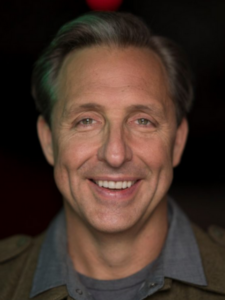
Dave Asprey, founder of Bulletproof and author of the New York Times bestseller The Bulletproof Diet, is a Silicon Valley investor and technology entrepreneur who spent two decades and more than one million dollars to hack his own biology. He leads the biohacker movement and was an early supporter of structured water science. His new book is Superhuman.
Click Here To Read The Video Transcript
Gina Bria: So, the Hydration Foundation, our work, welcome Alan and David Asprey today to our interview. We’re very, very excited to have such experts with us. It’s wonderful. I know Alan is already involved in plants and plant care, plant relationships. Very wonderful. So, this makes it even more relevant because what I wanted to ask you about before we start our interview is the proceeds of this interview, we invite donations to the Hydration Foundation because we’re helping water all over the world but we’ve made a direct link with farmers. So, all of the work of the Hydration Foundation and the work that comes into this project, The Summit, will go to water conservation and structuring devices that we purchase and then we give to the farmers. So, for every person who gives us, we ask for 99 dollars, they get The Summit as a thank you gift but what happens is, we buy these little spin funnels that fit on irrigation systems. and we give them to farmers all over the world.
David Asprey: Very cool.
Gina Bria: That water that goes into that ground helps plants grow and it reduces water costs. So, this is our huge initiative to use water wisely all over the world and the people who are asking, we think, are going to have the biggest point of influence and impact on farmers and soil regeneration.
David Asprey: I definitely support that. Right behind me, probably you can’t see it because there’s a wall there, is the 32-acre organic farm that I live on. And we actually gather, even though I live in a rain forest, Vancouver Island, we actually gather water during the winter months in a cistern that we can use to water the garden during the dryer summer months even though there’s plenty of water in our aquifer because, well, why not.
Gina Bria: And it’s a beautiful way to conserve and use water intelligently. So, from an anthropology point of view, I’ve looked at traditions all over the world for farming, using water wisely has been used all over the world by different indigenous cultures, where they actually shape the kind of water they’re using. So, they say rain water, that water has more electricity in it than regular irrigation water from the tap. So, we’re sending that electricity now down into the soils. And what happens in the soil is all the living creatures down there that are microscopic, they get an extra jolt of energy and they communicate with each other more intelligently, more systematically in a more orchestrated way. So, they get efficient at sharing water and information and the plants get all that information and health and they’re stronger and healthier. So, soils get better, plants get better all because we’re giving them water with a little extra electricity in it. It’s a really cool system. So, we’d love to have you behind us, David, to do any kind of matching grant or sponsorship you think about or we can come back to the conversation but we wanted to invite you into this project because we know we’re making the link between actually getting water into soil, a much shorter link or passage for people so instead of just going to the farmers market and getting to know the farmer and buying some radishes, we’re actually giving them the means to restore and reclaim acreage.
David Asprey: I would love to find out more after the interview.
Gina Bria: I can share that with you. I’m so pleased. You’re such an influential person and thoughtful person and I think you’re really on the right path in terms of where you give your time and energy. So, I would love to open officially. Our Hydration Foundation invites you to our Hydration Solutions Summit and have you here to talk about the role of hydration as the secret weapon of biohacking. And then, hopefully, we’re going to get around to the conversation on where coffee fits in all that. So, beautiful.
Welcome, David Asprey.
David Asprey: I’m really happy to be here.
Gina Bria: I’m happy you’re here. So, first question, very simple. What does hydration have to do with biohacking. Where do you see its role?
David Asprey: Biohacking, as I first defined it before it was in the dictionary, is the art and science of changing the environment around you and inside of you so that you have full control of your own biology. Now, hydration is pretty darn important because the environment around you, humidity, whether it’s in the air, is very important in part because it allows things to grow or not grow, it affects things even like whether the tissues in your sinuses will crack and allow viruses and bacteria and whether you have optimal humidity for humans and there’s a range for that. Too wet, you’re not going to like what happens with toxic mold. Too dry, you’re probably not going to like it although you can probably survive very well as we have evidence from where I grew up in a desert. So, the external water environment really matters, not to mention what kinds of pharmaceutical residues or just poorly thought through disinfectants are in the water. I’ve been disturbed for many years that there’s a calculation that says “Oh, we know x number of people get cancer from the chlorine we put in the water but since that’s actually a smaller number than the number of people will get parasites, it’s a totally good deal” instead of the proper way of thinking about this, which is how can we disinfect the water with the minimum possible harm and be willing to spend more on that. And the answer to that is generally ozone and ultraviolet and distributed filtration rather than doing everything centrally. So, we’re going through a renaissance on that front but inside the body hydration is a profoundly important thing because we just discovered in the last five years, maybe eight years, that at night your cerebral spinal fluid which is mostly water will rush into the brain, all the cells in the brain dump their water and all the toxins its carrying and they’re busy doing a water refresh. And that’s part of what deep wave sleep is all about. And we are water-based beings. There’s more water than protein or fat or minerals in us and there’s almost no carbohydrate in us at all, maybe less than 1% but it’s fascinating just to think that we are primarily bags of salty water. So, if you get the water right, it’s going to matter. And your mitochondria themselves, if they’re dehydrated, they cannot make electricity the way they’re supposed to. I also, through Bulletproof, funded some research on basic water chemistry at the University of Washington with Gerald Pollack who wrote a book The Fourth Phase of Water and he identified there’s an unusual gel phase of water right near the border. And it turns out, the research we funded showed that tiny droplets of certain kinds of fat, maybe butter fat, that’s like what you would do if you’re blending it into coffee, just saying, that it creates a high degree of exclusions on water, which is what that’s called. And when you consume exclusions on water, it makes your cells work better because they don’t have to make exclusions on water out of the water you drink. It’s already pre-made. And guess who figured this out first? It was the Tibetans – yak butter tea. It drove me nuts.
Gina Bria: Yes.
David Asprey: In 2004, I decided to go to Tibet. I went to learn meditation from the masters. And I’m in a very remote part of the world. It takes five days driving in a four-wheel drive all day every day just to get there. And there’s people who live with yaks pulling their stuff around. And you see these little old Tibetan ladies who are like four feet tall. They’re a half a mile from the nearest flowing water. And they can only heat things with burning yak dung. And every morning they take some of that water and they heat it up with yak dung, they make tea, and then they pour it into a butter churn, add some yak butter and then they spend 10 minutes going to chunk after chunk after chunk just manually blending it, and then they drink it. Now, it worked. That was the genesis of Bulletproof Coffee. I said “Wait. Why do I feel so energized after having this?” but, more importantly, “Why the heck do they spend 10 minutes? And why are they making all this mess when they could have just eaten a stick of butter and then drink some tea and then done with it?” And the reality is that it doesn’t work. I’ve tried it hundreds of times in the course of developing Bulletproof Coffee. You have to blend it. And, in fact, the people had to gaps. The wealthier Tibetans, even back in 2004, before we had so much battery-powered stuff, they would have a car battery hooked up to a blender so they could blend it instead of using a manual device but the idea that mixing the water did something to the water, no one knew why. We funded the research with Gerald Pollak that showed exactly what was going on there. It’s pretty fascinating.
Gina Bria: David, I’d love to remind, I’m not sure if our listeners or this particular audience would know that you also funded our TED Talks when we did Stephanie Senek and Dr. Pollack and they had an opportunity to share in a very shortened way what their research was. And I know you’ve been deeply involved with Jerry’s research. He’s one of our closest colleagues here at the Hydration Foundation. He’s helped us get to where we are. And his work is really what we are sharing on this entire summit, that there is a different kind of water that’s inside of us than what we think and that we can use materials like coffee with fats in it to get to a more efficient form of hydration than guzzling all that bottled water. This is great news. It really, really is.
So, how did you first stumble on the work of Gerald Pollack? What happened? How did you get to that?
David Asprey: For 25 years, I have been looking at what makes the human body work better. In fact, I just wrote my book called Superhuman around how we can live to be at least 180. And the reason I started doing that is I had the diseases of aging in my mid-20s. I was pre-diabetic, high risk of stroke and heart attack, I had arthritis in my knees since I was 14, brain dysfunction. And I was just hell bent and determined to figure out what was going on with me. And after the doctors failed and said things like “Maybe you should try to lose weight,” like “Yeah, I know I weighed 300 pounds. I also work out an hour and a half a day six days a week and I don’t lose any weight even if I do that on a low-fat low-calorie diet. And I do it for 18 months straight.” So, there’s something else. Well, there’s something else. And just after reading thousands of papers after becoming head of an anti-aging nonprofit group, it was mitochondria, the power of plants and their cells. Mine had been damaged by toxic mold, going back to that too much humidity in the environment and that’ll do that. So, our mitochondria are ancient bacteria incorporated into our cells. They’re environmental sensors and they make energy and other chemicals in response to the environment in a very elegant distributed attempts to keep the petri dish that is your body alive. And you’re basically a walking petri dish, from their perspective, and they’re largely in charge of the emotions you have and of the hormonal and stress state of your body, way more than it is even comfortable to think about. So, I went “Mine had been damaged. They didn’t work right because of all these toxin exposures. Maybe I can fix them.” So, I became really interested in mitochondria in the late ‘90s and I’ve been following research in that space. And Jerry’s work around how water works at cell membranes was really important. So, I’m just one of those people who follows these little hints and then has a brain that assembles things in a new way to go “Oh, there isn’t a study that shows it works that way but it has to work that way.” I am a computer hacker. I studied artificial intelligence, distributed systems. So, that’s just my brain does weird stuff. And this is important work and that was what led me to raise some of that money and then fund the rest of it for Jerry’s work because no pharmaceutical company is going to pay for this research. It’s fundamental research on human biology and it really matters. And I’ve fixed my mitochondria. Yeah, Bulletproof Coffee made a big difference for me and it has for millions of people at this point.
Gina Bria: One of our hydration messages is that fats is an important part of the hydration chain. People don’t normally think of that. They just think of the water from the bottle or the tap. That’s their idea of a hydration strategy. So, what I love about your work, and also speaking as an anthropologist who’s looked at hydration strategies around the world, looked at how Tibetans or there’s so many cultures that mix hot liquids with a fat, even cocoa is a hydrator and they all show up in these very high altitude cultures because they needed to quickly find that adaptations. So, each high-altitude place has its special drink that is a hot liquid with a fat. And that’s beautiful that you put that together in a modern context around Bulletproof Coffee. And I love that you’re citing that history with the Tibetans and that you brought this technique back into our modern world which is so hydration challenged. We really, really need very quick adaptations. Blenders are brilliant. Yak butter replacement mechanisms. Let’s use it. Let’s get out there and use those mechanisms as best we can.
David Asprey: It’s really fascinating when you look at historical cultures. I was in a taxi in New York about five, six years ago and I mentioned this butter and coffee thing. The driver of the taxi was Ethiopian. He said “Oh, yeah, my tribe does that.” And I said “What?” And he said “Yeah, in Ethiopia, my tribe, we invented something many generations ago called kill coffee.” And what they had done is they’d started out by grinding the coffee beans after they were roasted and mixing them with balls of ghee. And they would eat this before they go into war and eventually, they made it into a beverage with butter and coffee. So, there’s many different tribes in Ethiopia but he was just pleased that someone’s putting butter and coffee in the US that he went home and he got some Ethiopian butter that his grandmother had made, that he’d smuggled into the country, and he brought me a little pad of it. It was so cool. And so, they had figured out this gives us extra energy in a different way. And it was sort of a luxury or ceremonial thing to put a little bit of butter in your coffee. And I found out that in Singapore they roast coffee with butter in it, which has a very different effect as mocha fried thing versus roasted. So, we have these little nuances. And, of course, we’ve all heard about warm milk but it turns out when you put protein in there, it does something very different. It’s not a hydration thing at that point. It’s just a delicious, creamy warmness thing. And we put that kind of protein in. I think, collagen protein does something different. And so, I’ve gone through this path of just understanding what’s happening there. Part of this, I wrote about in Superhuman, I’ve had some of my blood taken out and they cultured my natural killer cells. These are the navy seals, the SWAT team of your immune system. And they cultured them and put 2 billion of them back in the body. This is something you’d normally do if you had cancer. I don’t have cancer, never have, but I wanted to have the immune system of a young person. I’m about 10.1% body fat, last I measured it. I’m in really good shape. I just had my [inaudible] birthday but I’m going to live to 180. So, I’m in my late 40s. So, I look at all this stuff and I say “All right, what happened?” Well, after my first infusion of those natural killer cells, for the first week I had to pee maybe 10 times a day and my bladder was always full. Now, from a hydration perspective, most of the time when someone has to urgently pee, their bladder is not full. It’s because you had toxins that affected your kidney and bladder. These are toxins really common in coffee, by the way, and other things but when your bladder is full, then you have to pee but I didn’t drink any more water, I didn’t change anything and I’m just being like no one’s business. Well, I have a machine at home, medical grade technology, that we use at Upgrade Labs, one of the Bulletproof companies and it measures body fat very carefully down to the 0.1%. And what it showed was that I lost 3% body fat in 10 days. And what was happening is that fat was metabolizing into water. And people forget that when fat gets metabolized, that’s how camels stay hydrated. Those big clumps of fat, it’s just water because breaking down of fat generates water. It is hydrating by its very nature. What happened in my case is I had an immune system that was functioning like a young person and it went through and it was getting rid of inflammation and actually by doing so, it was helping my body burn some extra subcutaneous fat. Who would have thought, right? The hydration there, it was remarkable how much water was coming out of me given that I wasn’t putting any in.
Gina Bria: Do you have any experiences or stories that you want to share about maybe the epiphany that comes physically, spiritually, emotionally, bodily when you see your body working in such a miraculous way, that relationship of water that we are water beings? Do you have any thoughts or stories around that?
David Asprey: I wrote the mission statement for Bulletproof and it said “We make products that radically improve people’s lives so that they can tap into the unlimited power of being human.” And what I found over the course, first, of healing all of the autoimmunity and the obesity and all the other stuff that happened as a result of my environment as a kid, once I healed that, “Wait. There’s just been a constant stair-steps” and “Wow! I didn’t know I could do that. I didn’t know that was there.” And I haven’t found an upper limit. In fact, I get to interview people on Bulletproof Radio who are pushing just crazy limits. Earlier today I interviewed Jill Reinhart who’s the modern Jacques Cousteau who’s done more underwater cave diving than ever. And we got to talk about her experience of water pressure and what it does to human biology. And there’s people who have gone to space, who’ve been on the show, and all of us are realizing “Oh, we thought we knew the upper limit” and you get these short-sighted people who go “That’s impossible.” And the answer is every single thing we’ve ever discovered was impossible until we discovered it. That’s just how it works. And so, my experience of all this is they told me when I was 22, after my third knee surgery and when they put a screw in my knee, they said “Look, you should just be thankful you can walk” like “You’re not really going to be running anymore.” I would have said “Look, there’s no chance I’m going to be able to track the Andes and the Himalayas and go to these remote mountain tops and learn from the lamas in monasteries and things like that but I did.” I was able to walk the core around Mount Kailash and go to Lake Mansarovar which is considered one of the holiest bodies of water on earth in the middle of nowhere but I could do that. And so, you just realize if someone says you can’t do it, it’s probably because they just don’t have all the information or because no one has the information yet. And that’s just been my experience that “Oh, I didn’t know I could get eight hours of sleep in six hours. I didn’t know I would wake up feeling this good because I never used to.” So, everyone who’s listening, you probably tell yourself like any sane person “I feel pretty good.” You might be running a 3 out of 10. You just don’t know it because that’s your normal. That was the case for me. I could tell “I don’t know where 10 is but I’m going to keep looking for it.”
Gina Bria: I love that you said that I’m also on this quest to be younger every minute, every day. Every curiosity brings me closer to being a full self but I don’t know what that full self is. I mean, what’s fun is that undiscovered part of me is all in front of me. And the helpful idea for me has been that since I am 99% water and that water comes into my systems from extraordinary ways, we haven’t yet thought about …
David Asprey: You’re like 70% water. You’re not 99% water unless you’re a jellyfish.
Gina Bria: Well, by molecular count.
David Asprey: Molecular count. I got to be counting molecules, tiny little water molecules.
Gina Bria: Right? Let’s just go for the 80% of the brain that’s water.
David Asprey: There you go.
Gina Bria: And think about that. Wow! What does that open up to me since water communicates with water? It’s communicating past my physical entity and the incoming information orchestrated by the water molecule is profoundly available to me and to my aging process or my youthifying process. Of my curiosity process of what I’m actually connecting to. One of the interesting things that’s happened to me since I’ve become better hydrated and I plan to be more better hydrated after talking with you is I noticed my ability to communicate or be communicated to by other water beings such as plants so that when I’m in the presence of plants, I have a much more, we might just call it, relish appreciation but there’s some kind of exchange going on that wasn’t present there before.
David Asprey: You feel more connected to the life around you because you’re hydrated enough.
Gina Bria: Yes.
David Asprey: It’s a fascinating perspective there because there are many studies out there that show even moderate amounts of dehydration lower cognitive function and a lot of my work around making nootropics or smart drugs acceptable and popularized has been around “Hey, let’s look at our brain function.” I actually started a neuroscience institute called 40 Years of Zen where people come and spend five days with custom hardware and software hooked up to your brain to give you a brain upgrade. And I’ve done it many times. I say “You’re not hydrated, you will have less voltage in your brain. We can measure your voltage and we can actually train you to have more voltage in your brain but you better be having some fat, you better be having some water. And if you’re dehydrated, it simply doesn’t work.” In fact, there’s a little-known Bulletproof product called Fat Water and it’s not my intent to sell them here. It won’t change my life if people listening do or don’t buy fat water but it might change theirs. And it has tiny droplets of brain octane suspended in it, which is an unusual type of fat that goes straight to energy and thus would affect hydration but we serve that to people before they do their neurofeedback because we find we get better results in neurofeedback from that. So, hydration and brain function and electrical generation of the body are intimately connected.Gina Bria: Well, that’s what we wanted to hear from you in this interview. We really wanted to nail the idea that hydration is profound body hack. If we’re not using it, we’re losing the most simple, affordable effective way to intervene with our body function since we are so much water. And also, this relationship between fat and hydration is profound in terms of its ability to communicate through electricity, send information around our system into other systems around us. So, glad that you did that. Glad that you provided that for us.
David Asprey: Alan just grabbed fat water from the fridge and he’s like “Can I drink it. Can I drink it?”
Gina Bria: Alan, good job. That relationship between fat and hydration, fat and liquid, is an important one to bring to our audience because they’re often not aware that these fats are what create the profound electrical conductivity of water. And that’s the part we’re missing in our tap water, in our bottled waters. And when we use water to irrigate our farmlands, that electrical function is missing. That’s a really important message to share with people. Get those fats in your liquids. So, now the next conversation, of course, the next question is about the whole world talking about coffee being dehydrating.
David Asprey: Oh yeah, let’s talk about that.
Gina Bria: I want to. So, glad we got you here.
David Asprey: People confuse caffeine and coffee as being the same thing, just like with cigarettes. Nicotine is one of the thousand chemicals in cigarettes and they have different effects. Nicotine has been shown to reverse Alzheimer’s disease when you’re not smoking but you’re actually using nicotine as a pharmaceutical. And I’ve interviewed, I call him Dr. Nicotine, from Vanderbilt University about that. So, let’s separate caffeine from coffee for a minute here. People say “Oh, caffeine is a diuretic. For every cup of coffee, you have to have a glass of water.” There’s no science behind that whatsoever. Caffeine is an exceptionally, exceptionally weak diuretic to the point it barely matters but let’s look at coffee. It turns out when you’re looking at coffee, what kind of coffee. Are we talking about Robusta versus Arabica? And what people don’t understand is that caffeine is a molecule that plants use to defend themselves from insects, bacteria, and mold. Now, that means the more stressed the plant is, the more it’s going to make caffeine. And Robusta are the cheap coffee beans that you’ll find in instant or in the pre-ground supermarket 2-bucks-a-pound kind of stuff. Those are generally much more moldy beans. And now, if you’re drinking coffee, that contains the most common toxin that grows, it’s a fermentation toxin from mold in coffee, It’s called Ochratoxin A which is well known, and I’ve 34 studies, you go to DaveAsprey.com, the post is called One Ugly Mug, and I cite all the research. And this toxin is OTA or Ochratoxin A. It specifically attacks the bladder and the kidneys and it’s implicated in cancer in those areas. So, our bodies, in their infinite wisdom, if you drink most coffee, especially in the US, you’re going to be getting a meaningful amount of this stuff. And the reason is that there are no limits on toxic mold in coffee from a regulatory perspective in the US and Canada. Now, China put a limit. Venezuela put a limit. All of Europe and Japan have a limit. And it’s in parts per billion. You can’t taste this stuff. Although your coffee is unusually bitter, it’s either brewed wrong or it may just have been more stressed and more likely to have mold but since we know that this forms that the coffee industry likes to say “Oh, it’s just a solved problem. We solved it,” no, they haven’t solved it. And I know because the Bulletproof Coffee Beans, the reason I launched them, there’s plenty of coffee in the world, I don’t need to launch another coffee, I want to do stuff they can buy. Well, ours is fermented, actually it’s non-fermented, we avoid the fermentation step that creates these toxins in coffee. And we lab test it. And our acceptable levels where these things are almost in order of magnitude better than the tightest limits anywhere on the planet. Now, what does that mean? Well, if you take something that is an irritant or an attacker of the bladder and kidneys, the body will go “Oh, this looks like a toxin.” Number one, it’s going to create the jittery, stress, angry coffee response and the desire for sugar, which your body uses to oxidize toxins but number two, it’s going to pull water out of your plasma because the solution to pollution is dilution, as you probably learned in fifth grade or something. It’s going to dehydrate your tissues to get enough liquid into your bladder and kidney so the concentration of toxin goes down and it’s going to tell you “You really have to pee” and you’re going to pee and half a cup of tea is going to come out. And you’re going to say “Why do I have to pee so bad? I really don’t have enough to pee” because the evidence is there’s no pee and the pee is white instead of yellow. What just happened there is you just dehydrated by a mycotoxin, a mold toxin, which is directly toxic to your mitochondria. This ancient war between mold and bacteria, it’s actually happening in your body when you drink coffee that’s not even regulated. And people say “Dave, you’re just trying to sell your coffee.” And here’s the deal. I have on video a former president of the Specialty Coffee Association, this is the biggest coffee body in the world, on our plantation in Guatemala and I said “So, tell me, Paul, about that time you were in Japan.” And he says “Oh yeah, I met with the trade minister. Japan rejected a thousand shipping containers of coffee that was too moldy for the Japanese market.” And I said “What did you do with this coffee?” And he said “We sent it to the US where it’s legal.” So, I will tell you there’s a smoking gun, there’s 34 studies supporting what I’m saying, and there’s a bunch of angry coffee trolls who are like “That can’t possibly be.” I’m going to stick with the science. I also quit coffee for five years because I felt jittery, cranky, and angry an hour or two after I would have it or when I wake up, with my joints are feeling off. And what’s going on here? The coffee is moldy. And if it’s fermented the way it’s normally been done, it’s the toxins that cause the dehydrating effect. And when I use my beans, I feel great, I can have as much of it as I want and it doesn’t make me pee any more than water. So, the real science is coffee and tea are hydrating. They simply are. You may also have substances in them that are dehydrating but it’s not coffee and it’s not tea that’s doing that. It’s something else that came along with it. You also could add a packet of NutraSweet or aspartame or some other toxin into your coffee and it will probably be more hydrating or it’ll damage your gut bacteria. And we haven’t even talked about the other big hydration thing. So, coffee contains, depending on how you filter it, a couple grams of soluble fiber. That’s why I like metal filters in coffee. Now, one of the things that creates hydration in the body is having enough soluble and insoluble fiber in the diet. A lot of my keto bro friends, I am a cyclical keto, high vegetable, enough ketones but not “If you eat another gram of carbs again, you’re a bad person” kind of a mindset.
Gina Bria: That’s my diet exactly, by the way.
David Asprey: Yeah, it works. Plants or a plate covered in plants.
Gina Bria: It’s beautiful.
David Asprey: And when you do that and you put some fat on them and a moderate amount of grass-fed high-quality animal protein or no animal protein, if you’re faced with eating a feedlot animal, don’t do that, then you’re going to feel very different when you pursue that but you’re also lowering your toxin count if you do it right but what I started doing is I made something called Inner Fuel which is a mixture of essentially tree saps, tree resins. It comes as a powder. It has essentially zero flavor. I put it in my coffee. Now, I’m getting 20 grams of soluble fiber in my coffee and that’s two-thirds of what the recommended daily number is. And if you want to live a very long time like I write about in Superhuman, you probably should be closer to 50 grams. So, I get my 50 grams a day between my veggies and adding fiber but when you have enough fiber sitting there in your gut, it’ll actually hold water and allow the water to be absorbed. So, just because you drink water, it probably doesn’t do very much. If you just chug it and then you pee it out, you’re not hydrating anything. You’re just washing.
Gina Bria: Yes, I’m so glad you said that. One of our strategies we’re teaching during this summit is that you need fiber, you need foods to hydrate with. You can’t just have bottled water. And yet the eight cups a day is what people typically hear from the science and medical community. We are really trying to help people think “Wow! There’s a menu for hydration.” And we need it more than ever because the environments that we’re living in now, we are in super dehydrated environments. We must adjust for this now, especially with electronic devices.
Dave Asprey: You know what makes me just laugh? All these doctors saying eight cups of water a day or eight glasses of water a day and you look at them and go “How big are the glasses?” And they go “I don’t know” like “Okay, you’re not really following the science here, are you? Are these 16 ounces, 12 ounces, 8 ounces?” They can’t tell you because there is no study anywhere. And then I look at them and I say, back in the day, “So I’m 300 pounds, doc. That lady over there in the waiting room, she’s 90 pounds. So, do we both need eight glasses of water a day.” And he’s like “No, you probably need more.” “So, what’s the equation?” And it turns out the amount of what do you actually need is going to be a factor of how much fat you’re carrying on you versus how much lean muscle mass, right? And it’s going to be a question of how hot and dry is it, how well is your thyroid gland functioning, are you sweating the way some people do and other people don’t, how much activity do you have? So, eight glasses of water a day, it is not only meaningless, it is harmful as a recommendation for people. It’s like an amazing thing, it’s called thirst. That’s going to be pretty useful. I went through times when I’m measuring all these variables in my body as a biohacker. When I was really toxic living in a moldy house, I did a 24-hour urine collection challenge to look for toxic metals. I peed seven liters of water in one day because I would just have unending thirst. That means I probably drink nine liters of water that day. That’s crazy pants but that was what I just felt like I needed at the time. So, maybe your toxin exposure, if you have more toxins and you need more water, you do. So, all of this stuff, it’s better to give no advice than advice you drink when you’re thirsty. And if you have hydration problems and you look at your skin, you can you can see some things, drink more if you have those but this eight-cups-a-day, can we just end that right now? It’s dumb.
Gina Bria: Together, we’re going to end this right now. No more eight cups. It’s a personal prescription that you’re going to have to discover a lot of things about yourself, which are actually delightful to know about, like finding out who you really are, as a physical entity, turns out to be a joy path, not a task that we add to everything else we feel we have to do. Discovering the miracle of your body and the fluidity and the future and curiosity, the joy it can bring you, it’s extraordinary. We’re just trying to do that by opening the portal of hydration because it’s so central to connecting ourselves to ourselves, connecting ourselves to the world around us, and especially because we live in such dehydrating environments now. They don’t biologically match us anymore and we’ve got to adapt.
Dave Asprey: That is very true. Gina, I’m running out of time for our interview.
Gina Bria: We had a beautiful conversation. Give me one tip about hydrating that you like, one fast tip, now that we’ve debunked coffee.
Dave Asprey: Here’s a really good thing. If you’re feeling thirsty or dehydrated, drink more, but drinking more doesn’t make you a better person.
Gina Bria: Thank you, Dave Asprey, from Bulletproof. We love you. Bless you. You are being among us. And thanks for this interview.
Dave Asprey: Thanks, Gina. Have a great day.
Gina Bria: You too. Bye, bye.
Dave, I appreciate you deeply and we will air this with quotes on The Summit.
Dave Asprey: Awesome.
Gina Bria: And all the money goes to farmers for getting better hydration into the soils which we know will regenerate.
Dave Asprey: It’s important to have hydration in the soil. I would love if you send me some info about it. I’d love to check it out.
Gina Bria: Yeah. Take care, Dave.
Dave Asprey: Thank you. Bye.
DONATE NOW
$99 = 3 ACRES
$99 = 3 ACRES
With your donation you will receive lifetime access to the Hydration Solution Summit and a farmer will receive equipment to reclaim 3 acres of farmland. Donations are tax deductible.
Did you know the Hydration Solution Summit contributes a portion of your donation to farmers so they can reclaim their land and our food supply from industrial farming?
Water is calling us to help hydrate ourselves and our planet. Chemical farming and dehydration go hand in hand and the cycles can be broken. Farmland can be restored when charged water is applied. Charged water restores land by accelerating the dissolving of chemicals and supports natural ecosystems through hydrated soil, microbiomes, plants and crops.
For every $99 donation to the Hydration Foundation water activation equipment “which charges the water” is given to a farmer to restore 3 acres of land. Please join us in this important cause to rehydrate people and the planet.
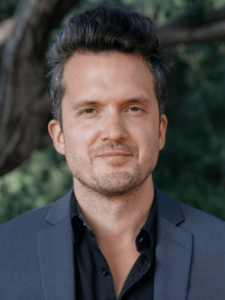
Finian Makepeace is co-founder of Kiss the Ground.com and a renowned presenter, media creator, and thought leader in the field of regenerative agriculture and soil health. To inspire participation in global regeneration, starting with soil, he has designed training programs and workshops for practical application. His current passion is hydrology or world water systems.
Click Here To Read The Video Transcript
Gina: This is the next interview in our Hydration Talker’s Talk, scientists bringing hydration news to you that you never heard before. This is Gina Bria from the Hydration Foundation and I’d like to introduce our next speaker Finian Makepeace. Is that a fabulous name? So, glad.
Finian, we are really honored to have you here because we know you’re going to open the dialogue around what your work is and why that’s related to what our work is, linking people up is how we’re going to make such extraordinary and accelerated change in the planet. So, we’re really happy to have you speak about what Kiss the Ground is, what your work is, and why we’re going to link that to hydration in this interview. So, tell us a bit about Kiss the Ground, what it is, what your mission is, and a little bit about how you got there.
Finian: Great. Thank you for having me. Kiss the Ground’s mission is inspiring participation in soil regeneration.
Gina: Yes.
Finian: That is what we’re here to do. And that comes in a few different forms but our pathway here is slightly what I would say from the unusual suspect of being a part of this movement. Myself, I was a touring musician and the other co-founder Ryland was a restauranteur with vegan restaurants called Cafe Gratitude. And then our third co-founder who came on a bit after, Lauren Tucker, she was someone who had already been connected a little bit more with the Master Gardener programs, etc. but the initial moment for us was really this profound view shift where, to put it as simply as possible, we went from a state of extreme apathy or at least, to connect it to our lives, both myself and Ryland being active activists who were constantly trying to do better in the world, trying to bring ideas of how communities can work better together, being community leaders on everything from human connection to policy. So, we had been active, right? We had been excited about trying to do what we could but there was this deep layer of apathy that was entrenched all around us based on the trajectory that we were on, based on understanding where climate change was, where human population growth connected to land degradation really was. It was not a pretty picture whatsoever. So, looking at the grand scheme of things and connecting that to how we felt about the real opportunity, if there was one or not, was pretty low. And then it started with Ryland. He was in New Zealand, listening to a panel of experts and scientists speak about can human beings sustain themselves on planet earth. And the first five people spoke of kind of the inevitable doom that we’re facing based on our trajectory and said “You know, at this rate, we’re not going to survive as a species at least to the degree that would be good for most people.” Then, the last gentleman, his name is Graham Stake, he said “Yeah, I agree with everything everyone’s saying. And we forgot one major factor and that’s soil and soil health and the ability humans have to participate in rebuilding soil and soil health, rebuilding humus.” So, Ryland was …
Gina: Humans to humus.
Finian: Yes.
Gina: The root word is the same. I love that. I love that. Yeah, we’re putting our hope in soil.
Finian: Exactly. So, Ryland came back with a deep sense of inspiration of kind of saying “Wait, I’ve been in organic food my whole life and didn’t know about this.” He was really excited. He convinced Graham to stop in LA on his way to San Francisco and he spoke to a group of us. And, for me, I had had a really lucky chance of having some background in connecting two soil. I was raised in upstate New York in Ithaca and when I was in school, I was actually able to study with Cornell University some of these first studies for mycorrhizal fungi and the connectivity they were giving to oak groves to defend themselves from airborne viruses. So, long story short, when I was hearing Graham speak for four hours about the soil health-human health connection, hydrology, carbon sequestration, the whole nine yards, so many of these terms and ideas were coming back to me and I had had a reference for them. So, we went back that night to Ryland’s house and we shook our hands and said “You know, if this is all true, pending this is not a bunch of BS, we’re committed.” We basically had at that moment life-changing commitment to “We have to do whatever it takes to get the word out about this, if this is true” because the last thing I want to say about this is I felt like “If I didn’t know,” I considered myself very educated around climate change, around the trajectories, the levels and I was like “If I don’t know, probably most people don’t know.” And that’s turned out to be a fair assumption but that was that driving force of “If this is an opportunity as big as it was just shared to be, there really isn’t a bigger opportunity out there in the world.” And we both knew ourselves as people who could share things, get people excited about things. So, we were like “Well, you know, this isn’t exactly what our careers are but this is what we’re committed to.”
Gina: You have been proactive.
Finian: Yeah. [inaudible][06:39] in that moment, exactly. So, I felt profoundly responsible. And we knew that we were able to share the word. So, that’s where we started.
Gina: Yes. And let me see if I can, I mean, for our listeners what you know or what you want people to know or if you didn’t know, how could anybody else know, is this new knowledge which is coming through many, many studies now showing that healthy soil sequesters more carbon than any other practice we could possibly get to. And, by the way, while we’re solving the climate carbon storage problem, we’re also developing new layers of nutrients in the soils, building those up in such a profound way that they feed us new levels of nutrition, organic materials that now link to the one into chronic illness problem that we’re noticing. So, the cycle is complete. The final linkup is happening for all of us where we understand that building soil is the fastest, quickest, most beautiful, playful joyful thing we can be doing to domino down all the problems that everyone is saying is unsolvable.
Finian: Yeah. Thank you, Gina, for that reference because it really feels crazy sometimes the all-encompassing connectivity that the soil is but then, again, you look at a lot of indigenous wisdom and cultures for such long periods of time, who did understand that and they did have that as a driving force of what their part in this was. So, unfortunately, kind of mechanical thinking has spread and, unfortunately, taken over in all sorts of places around the globe and how we should perform agriculture, how we should produce our food and kind of sunk in a lot of people and, I think, into the inevitable thinking of this is just how much destruction has to happen to produce the food we need. That’s just how it has to go. And, unfortunately, that’s not the case. That’s the big news is that we can help nature regrow soil.
And so, I want to share something that was a phenomenon for all of us at Kiss the Ground in our thinking shift and the pathway because I hope it can be an invitation to other folks. We got in this initially because we were worried about climate change and the connectivity of that for us was greenhouse gases in the atmosphere, right? primarily CO2, carbon dioxide. So, when we heard that re-growing or building back soil would sequester carbon from the atmosphere, that was, of course, a major trigger of like there is a big solution. We can do it faster than we ever thought possible. We’re all in it. So, as we evolved though in Kiss the Ground and we were able to connect with these amazing experts and leaders in this field, the concepts of moving our thinking beyond sustainability. You cut down a tree, you put back another tree, right? How do you replace what you take out, that thinking of the circle? And so, we were kind of in that for the first year and a half or so, thinking about soil as a bank account like “Okay, you withdraw, you got to put back” but then we had the regeneration epiphany. And this was what really took off everything because when we shifted our thinking in our organization from, what I call, sustainable thinking which is the circle it back, we take out, you drink a glass of water, you fill it back up, the respiration and then like you’ve done this much damage, you got to stop doing damage, we got to halt the damage to sustainable thing. When we grasped … For example, someone in my class Tuesday was trying to explain it and I was reminding them that that was more in the conserve-restore thinking. So, if you have a refrigerator and you empty your refrigerator, then you’re trying to sustain that and that doesn’t make sense. And then if you fill it back up, that’s regeneration, right? And I was like “Not really.” Let’s go a step further. Let’s pretend you had a refrigerator. You took all the food out. Then you smashed your refrigerator, broke all the pieces, all the electrical wiring is broken, completely discombobulated, and then, hypothetically, you start to restore your refrigerator. All of a sudden, the electricity comes back and all of a sudden all of the thermal regulators come back and all of a sudden insulation comes back and all of a sudden there’s a water purifier system in your refrigerator. And then magically, all of a sudden, your refrigerator starts having seeds of refrigerators and multiplying other refrigerators and creating even more containers so that the refrigerator is not outside baking in the sun etc. and the house is built around the refrigerator and there’s electricity in the house. So, the self-replicating nature of additional organisms being able to be supported by one organism, the atrophic cascades that can happen when regeneration is in effect, an entire system, not just one thing but an entire system being able to come back to how it is supposed to function at its apex, its best mode, right? That’s when start to consider “Wait a minute. We have a limited frame for what we’re looking at when we see what we see around the world. It’s the way it is. This is how it is. How do we do less harm? How do we sustain what we have here? How do we put back what we took out last year?” We were like “Wait a minute. We’re comparing to maybe five years ago. How do we repair what it was like five years ago? That it’s not what is so exciting. What’s so exciting is we could potentially have this land become and perform at the ability that it did at its apex, whether it’s the prairie system or a forest system or a stream or watershed. The potential, when we were looking from a regenerative frame of over time ecosystem carrying capacity increasing, how much life can be held, how much water can be held, how much of that structure of the land is functioning right so that everything is working better for everything else, overtime in production,” so we have our production graph here and we’re saying “Okay, over time in production we can actually increase. So, while we’re producing our food, we can actually increase how much carrying capacity the land has.” This becomes the big breakthrough – how the land functions. And we talk about hydrology, which is one of my most favorite subjects.
And just to be totally truthful, we went from carbon sequestration to regeneration epiphany and then in the last couple years really grasping the whole hydrology conversation and how immense it is for when we’re getting into the structure and we’re getting into functioning land, not just co-benefits. Yeah, you sequester carbon and then there’s these other co-benefits. No, going from broken land to fixed land that’s performing like the Olympic athlete of land or like the completely dying person in stage of almost completely dead, like moving from those two functions of a land when we talk about hydrology and water cycles and water sources blah, blah, blah, I could keep going. That’s for now and that’s what to me the pathway of the exciting thing. Farmers, when they get this versus just substitute a couple practices, when they really get the potential of regenerating their land and convert their thinking, that’s when we have major, major radical changes that are uplifting communities providing more resource from that community. So, yeah, I could go on and on but there you go.
Gina: I’m thrilled that you are. And you’re helping establish a new form of thinking that is developed as we looked at the climate problem and everybody was going “Oh, whoa, this will never happen” to the concerted effort to really think “How we’re going to do. Is there anything we could just do for a little bit?” and then we got into the sustainable agriculture conversation. I’d love for all our listeners to realize we’ve gotten that conversation grow and was blessed and became regenerative agriculture which is a whole new level of problem solving, a glorious opening, calling to a much better life so we’re not scrambling to stay afloat anymore with sustainable. The conversation is closed.
Finian: It’s almost like it’s too good to be true. My job out in the world through my soil advocate training is to give people all over the world the ability to speak on behalf of this and make it clear that this isn’t just some fairy tale like this is real, it is good as we’re saying it is and it happens. Why? Because it’s happening right now.
Gina: Yes.
Finian: So, here’s a really helpful thing for folks out there listening, to help you describe two really helpful things for you as an advocate when you’re out there describing this idea to people so that they don’t think you’re talking about sustainability. You say “We’re not talking about sustainability, first of all. There’s nothing really wrong with sustainability but let’s check into it for a second, okay?” So, here’s the first tool. My colleague Dawn came up with this hand gesture, basically. This is humanity over time, over the past 7000 to 10,000 years, degrading our land. That means the function of our land, how much soil fertility there is, etc., right? We’ve been degrading it to produce our needs. If you just look over the last 40 years, we lost one-third of our farmable land, okay? So, going down. And losing the carbon that was stored in our soils. 50% to 70% of our carbon gone from the cultivated lands, okay? This is the degenerative curve, right? Then we’re saying “Okay. Well, let’s look at where we are now.” We’re way down here, right? If this was our ecosystem carrying capacity, up and down this way, we’re now way down here. The land is broken. Carrying capacity is down. The fertile crescent, the Middle East, it used to be fertile. That’s not just a joke. That was actually a fertile place. And all across the globe, including US and the dust bowl, you fly over the country right now and you see all this land that’s just barren. If you look closely, it’s old farmland that’s degraded, right? So, we’re down here. So, the question is do we sustain? Sustaining, yes, is better than continuing to go down but we’re already way down here in this very low carrying capacity level. Sustaining that means that that’s the best we got. That’s it. Sustain means maintain. The question is why don’t we regenerate, increase ecosystem carrying capacity. We have to. The good news is we can. That’s the really phenomenal news is we finally really grasp that all over the world, anywhere in the world, we can implement these principles and increase the carrying capacity. So, then we’re saying “Up here. Then we can sustain.” So, the little joke for everyone out there is sustainability is just ahead of its time, okay? There’s nothing wrong with sustainability. It’s just we’re not at a good place for that to happen. We have to start with regeneration.
The second tool when you’re talking about the idea of regeneration is to give it context. So, saying “Okay, most of us think of the circle as sustainable, right?” We put back what we take out of this circle. We’ve seen it in the recycling symbol, blah, blah, blah. We have that kind of as our metaphorical idea of sustainability, okay? So, that’s sustainability. Regeneration is a spiral that starts very diminished thin spiral and thickens and it’s becoming ever increasing. So, this change of how your thinking is or how you’re relating it to someone, you can say “Look, I’m not talking about this. I’m talking about starting from diminished state and ever increasing.” So, these are some tools that we’ve seen work. Whether you’re sketching it on paper, doing it with your hands, showing the slides to show presentation, that can really, really help.
And then of course, Gina, as you know, there are demonstrations that anyone can do anywhere that talk about land function. Can I jump into that? How much time do we have, by the way?
Gina: Yeah, it’s at your leisure, sir. A quick intervention I want to make for our listeners is helping them understand there is a reason why you have the Hydration Foundation and the Kiss the Ground organization, brining the CEO of that.
Finian: I’m actually the co-founder.
Gina: Co-founder?
Finian: I direct our leadership program.
Gina: He’s our leader. And putting these together is linking up incredible resources. So, part of your new hydration strategy, instead of drinking all that water and wasting it, is to be involved in sharing soil regeneration practices. This is your juicy new part of our new way of being in the world if we’re going to adapt. If we’re going to do the work we really need to do, which is care for our ourselves and our creation, soil is [inaudible][21:13]. We want to be educated and powerful and be involved and that may mean choosing your foods that we know are hydrating foods instead of all that plastic bottled water from farmers who are practicing regenerative techniques, not just another company that’s doing sustainable agriculture. We want to carry you up to this information and this knowledge and give you the power to start making these economic choices, health choices, and also beauty choices and longevity choices. And, ultimately, this is about why our generation right now, all of this whole cohort on earth is being called to heal the planet, heal the soil and drought. Soil is earth. We’re going to do it.
Finian: So, Gina, on that, thank you so much for that. And I really hope that in this whole summit you guys are putting together that folks who are interested in the water systems and hydrology can have hopefully some of the same big epiphany aha moments that many of us who came through, the soil or carbon sequestration portal into this.
One of the most fundamental parts, as we mentioned early on today, is the topic of functioning, right? So, most of us know when our body is functioning mostly right. Things are happening. We’re getting the energy we need from what we eat, right? So, when we talk about when something is broken versus working, that’s important. So, one of the biggest concerns to humanity right now is flooding and drought, right? We’re facing expanded intensities of both of these cases. And while it’s very much a part of it, oftentimes it’s talking about climate change is causing all of these issues. Okay, great. That’s a limited perspective conversation but what we’re not talking about enough is how the land functions.
So, what was soil designed to do? When it rains, Gina, what is soil supposed to do?
Gina: Absorb.
Finian: Soil is designed as a super sponge. So, when soil has a living plant in it, as nature intended, when it rains, you’ll have water hitting plants and then slowly seeping down and actually being absorbed in a soil substrate that has humus and humidified organic matter in it that is actually aggregated soil structures that can hold 20 times their weight in water. They are made by the glues that were created by the soil organisms that the plant fed, okay? Really quick lesson. This is a plant. Plant collects carbon from carbon dioxide out of thin air and it connects it through the energy of the sun. It bonds carbon from carbon dioxide with hydrogen and oxygen from water that it got from its roots inside of its chloroplasts in the leaves. That liquid is called carbohydrates, liquid sugars. What we didn’t know is not only the plant obviously grows from this liquid sugar carbon but it also pumps 30% to 40% of that liquid sugar out of its root systems to feed soil microbes like fungi and bacteria and a myriad of others in the soil food web. What we didn’t really get was that there was 30% to 40% of those sugars being leaked out to feed those organisms but even more importantly that those organisms, the fungi and bacteria primarily, the fungi are creating long strands of hyphae that go and access minerals for the plant but the process of that, those long strands are protected by sticky proteins called globulin. And I said sticky which is really important. These are proteins which are carbon, carbon-based long strands, and when those fall off or even when they’re living, they are wrapping soil together. They’re aggregating soil in these superstructures because they are long sticky strands. And those superstructures become these aggregates that can host tons of other organisms but primarily are designed to hold 20 times of its weight in water as super sponges that are based of carbon, right? So, we got our carbon sequestration but we also got the function of our soil, okay? Now we got that mini lesson. So, that’s happening under the ground and plants are feeding that with their sugars all the time.
Now, when we take the plants out and we till the ground or leave the ground bare, those little aggregates which are like super structures like a house, imagine them, they’re very small. So, when it rains, when we have raindrops that are about this size to an aggregate that’s this size, the aggregate explodes, all those teeny particles rise to the surface. And what ends up happening is you end up cementing off or bringing the smallest particles to the top, the clay particles, to the top of the surface and then they seal off the surface. And so, you have no plants. When you till and leave soil bare, for example, you have this new condition. It’s not the condition that nature invented so that water falls from the sky, absorbs into the ground, is there for the plants for long periods of time in that soil sponge and then also slowly leaks underground to refill our aquifers or it goes down even further and then goes out to become a spring and feed streams and have water run year round. Now, what happens, you have this sealed-off layer of soil. When it rains, you have a runoff, massive amounts of runoffs which is taking soil with it at four tons of topsoil per acre per year but also allowing water to evaporated at really quick rates. So, you’ll have a little teeny bit of the surface that’s full of water. And then over the course of a day usually, most of that, 80% of that water is going to evaporate if it’s a sunny day. So, that’s the condition. That’s what we’re doing when we’re saying “Oh, this is just how farming works.” Unfortunately, if you’re not cover cropping and doing no till and you’re not implementing regenerative farming practices, you are contributing to massive runoff of water. And so, we say “Why is the flooding happening?” Well, I just explained it to you. The water is not absorbing into the soil. Why are droughts happening? I just explained it to you. The water runs off, a teeny bit evaporates off the surface when it’s left there and then there’s no water staying in that soil sponge. There are no plants protecting it, shading and cooling it. So, we look at this phenomenon of the water system completely broken.
Gina: Right.
Finian: Here’s the good news. In a system that has very little water infiltration, like in Texas, for example, in Houston where we had a lot of flooding a couple years ago, when you look at that, and you say “Okay. Well, yeah, we understand a city can be flooded because there’s lots of hard surfaces, right?” but what if I told you, I know Dr. Alan Williams who’s tested hundreds of ranches in that area, and the average infiltration rate for those ranches was a half an inch of water per hour. So, if it rained a half an inch, the time it would take for that half an inch of water to infiltrate into the soil was half an hour. Now, when he’s converting these farms to regenerative grazing practices, for example, these ranches, see if you can guess some of the averages that come back for how quick the water will infiltrate, instead of an hour.
Gina: Say it. Tell us.
Finian: Eight seconds.
Gina: Oh, yes.
Finian: So, when we look at a macro scale and we say “Could a community come together and say we’re dealing with flooding and drought, our soils running off, now we need more fertilizer because we took off the healthy fertile soil and the government’s got to help us and 2 billion dollars in damages?” Wait a minute. Why aren’t more people talking about how the soil is performing and how the soil plant system is operating. If we can go from a half an inch of water in an hour to a half an inch infiltrating in eight seconds, that changes a lot. I’m not saying there might not still be little flooding here and there but if we have big flooding scenarios, all of a sudden, the hydrology of that place is significantly changed. And then the amount of water that’s remaining for those plants in that soil sponge is more. That means those plants can photosynthesize for longer, which means they pump more carbon sugars because that’s the only time they’re pumping carbon sugars into the ground is when they’re photosynthesizing. The more that they do that, the more aggregates they build. The more the soil sponge builds up, the more water can be held. The more water can be held, the more plants can photosynthesize. That’s a regenerative effect. It’s literally self-regenerating at a certain point and then that means you have water infiltrating, held in that sponge, and then you have it percolating down into the ground to fill our aquifers. And then when that keeps going and hits a solid surface, it goes out over here to the lower part of land and flows out as a spring. That’s how springs can come back. And we just got just got a video from Kenya. They hadn’t had running water springs in this place for 25 years or so. They started doing holistic management. The springs came back. Instead of walking for three miles to get water in this village, they’re now having springs come back year around because they made the water system work again.
Gina: Yes. And why you and I are having this conversation, everything you’ve just said, Fenian, is an analogy to what happens to hydrating a human body, human issues. It’s the same exact process. And the eight-glasses-a-day prescription is a flood story or we’re in environments that are drought stories in our human health population. Forget human health. I’m just talking to you and your body. This is how you hydrate. You have to hydrate with materials that are in your body that absorb and sponge. That means a lot of food, fresh food that’s full of fibers that contain exactly the same thing. In fact, even using mushrooms to hydrate is a fabulous strategy. We can talk about all those foods that help bring hydration and allow them to do the work inside of us that right now we’re flash flooding our systems with.
Finian: That’s so great. Yeah
Gina: As above, so below, right? These are all systems. They function in a very, very analogous way because they’re designed by nature. Actually, we grew out of the soils. So, why wouldn’t us, why wouldn’t our biology match a planetary biology? Of course, it does. These systems are not alien to us. They are inherent to us.
Finian: I love this analogy. And I I’m going to take it from you. We’re on the same team but you think about some of these diagnoses like, yeah, you have to drink this much water. And like you’re saying “Wait a minute” and what my brain is going through right now is a lot of grassland … There are brutal environments and there are waste environments. Brutal environments basically mean like for over half the year the moisture content in the air is sub-zero, it’s almost nothing, right? In those environments grasses is what you usually find. You don’t see a lot of big tree forest and things like that because grasses are designed to structure soil really well and make these soil sponges hold water for extensive periods of time, photosynthesize tremendously. They’re designed for it, right? So, then you say “Okay, if we start plowing that land, planting crops there and then being like “Oh my gosh, they need so much water. We’re going to have to start shoveling water in here,”” we’ll be like “Well, the native highly diverse species of grasses and flowers, etc. in this prairie, how did it stay green for that whole time period, right?” And then we do all this management to it and it’s all messed up and we’re like “Oh no, you have to water every single day” and we’ll be like “Hold on a second. That goes back to the question I’ve always wondered.” And I’m so glad you brought this up. I’ve always had the thought in my head of being like it doesn’t make sense that humans have to drink this many glasses of water. Think about how often would you have access to a stream, how often would you be able to go chug high eight glasses of water. Thinking about it contextually, this doesn’t make any sense. This isn’t how we were designed. There must be something. It’s not working inside of what we’re eating. We’re harming the insides of our body, how well it’s absorbing, what kind of foods we’re eating, etc., etc. So, that’s really great because I look a lot at the systems of agriculture and how insane they are in terms of like “Well, we just got to water this much” and be like “Well, what if I told you if we did this and this and structured your soil better, you wouldn’t have to water half as much?” and you’d like “Oh, no, I don’t believe it.” – “Well, this farmer just did it” or “This person just did it.” So, I really love that. Thanks for sharing that.
Gina: And also, with further work as an anthropologist that I did, Finian, was looking at desert communities and how come they weren’t dead without eight glasses of water a day. They don’t have eight glasses of water. What do they do? Of course, they were using plants, water stored in plants. So, one of our major messages at the Hydration Foundation is eat a high plant fresh food diet. Even if you cook vegetables, fine, they’re still mushy enough, full of profound hydration for us. And that’s why another link between our work and your work is we really want to help people get access to good, fresh, beautiful, potent plants that are well hydrated because that’s our most efficient form of hydration, our way too because we’re part of the system. We’re part of the biology of nature and our system runs the same way. The plant fibers that you eat hold that moisture longer, they dissemble more slowly, they deliver the nutrition more potently to better dissolve, you get higher absorbability at every level. It’s planned to develop. And I love what you are working on, which is the link between human health and soil health. And soil health is maybe not the most exciting word that people could hear. Maybe just talking about we all are in pain over our earth, over creation. We know it’s in trouble. We’ve lost so many species. We’ve lost so many plant varieties. We know our planet is in trouble and it’s our cohort, it’s our generation that must embrace that challenge, love the earth back. Kiss the Ground. There’s nothing more to say. You got it. Kiss the Ground is reverence. And the thing is it isn’t a scare tactic, terrible frightened task that we’re doing now with no end in sight. Regenerative agriculture has shifted the mission to a doable, joyful replenishing to the planet and to us, projects that are about what we buy, what we eat. How we move through our days now have a purpose that has an insight of triumph.
Finian: I think the concepts of regeneration and thinking regeneratively, we say #ThinkRegeneratively all the time because in exactly what you’re talking about, in what I’ve seen for any cutting edge company that’s been involved in first conservation, then sustainability, then restoration, they all get to regeneration because it’s really what nature is trying to do. And I think it’s been trying to tell us and probably has told and worked with lots of indigenous cultures. Unfortunately, we’ve just forced this mechanical model. I make the analogy of swimming upstream. We’re like forcing our way upstream to like we don’t really know what happens when we turn downstream and go with everything else in life which is designed to work regeneratively and helping that function at its highest capability or potentiality. Why aren’t we doing that instead of this like we’re going upstream, we need another band-aid, this is hard. We can shift around. That’s the beauty of it. And then seeing the economics follow this, seeing that healthcare versus what we have now which is just sick care. We can become a regenerated species that’s at the best of our capacity and that’s where the thinking change. And I appreciate what you shared.
We’re almost out of time. I want to share one more helpful thing for advocates and people out there. There’s a thing that Didi Pershouse, she’s one of my advisors, and she has a bread and flour demonstration which anyone can do in their kitchen, anywhere around. You take two pieces of bread, put them on a plate and take a cup of flour, put it on a plate. Then you take two paper cups of water, poke holes in the bottom of the paper cups and you pour water into the paper cup and pretend it’s raining and you’re showing people what degraded bare soil is. If you go over the flour first, you get to see what happens. The runoff, the lack of infiltration, the messy water, imagine if there’s chemicals on the land, and you’re seeing “Okay. Well, that’s how tilled, degraded bare soil operates.” And then you go over to the bread and you watch the infiltration happen and the absorption happen. That’s how healthy soil is designed, that aggregated sponge like substance. That’s how soil evolved to work. And you watch it infiltrate. It’s held. You imagine there’s a plant in there. It’s got all the water it needs. And then you imagine all that water flowing out crystal clear out the bottom because once it hits the plate, it’s coming out the bottom of the bread crystal clear. And that’s analogous of our springs and our rivers. So, again, when we’re talking about the human health connection, when we’re looking at anything in nature and we’re looking at our farming, I implore everyone, as I’m sure you have been doing, in saying we’re all these mirror images of how things operate. And when we start to think holistically and we start to take that second to analyze something in the holistic framework, the logical thing becomes regeneration and helping our bodies, helping our land and helping the bodies and land of all other things to perform in this regenerative state. And that’s what I think is so exciting about this revolution because I’ve talked to countless folks from people who are in mental health thinking or spirituality thinking into farming. It’s all coming back to like humans can connect to this regeneration ability. And that’s, honestly, what I think is going to shift our population to save the world or make it a place that is actually great.
Gina: The shift has happened. So, I invite our listeners to come join it. We’re in place. We’re taking action. There are people all over who are doing regeneration acts towards themselves, towards each other, towards the soils, towards animals, our life with plants. We’re in it now. So, be part of that. Go see KissTheGround.com. See the work they’re doing. Find ways to help our farmers, whether you buy from them, whether you support them. I’d like to put a special notice here that their Farmer’s Footprint Initiative is also part of our work at the Hydration Foundation. We want to support farmers in all sorts of extraordinary ways. First, you have to become aware that there’s a whole group of people out there actually leading brand new ways of power, change, and excitement and it will all bless you. It will bless us all. Come on.
Finian: Please. And thank you so much for having me. I thank you for the work that you’re doing and connecting these worlds where people are invited to understand that it is all very, very connected and we’re all working together. So, Kiss the Ground. Our goal is 25,000 leaders trained or advocates trained by 2025 and 5000 farmers trained through our Farmland Program which we work also with Farmer’s Footprint but getting it so that we’re helping to transition land and transition people’s thinking. And we desperately need more people stepping out onto the court and doing what you’re doing, what we’re doing, and bringing that initiative saying “Okay, if the world is going to shift in time, totally possible, what we need is, is people feeling empowered.” What I believe we need is more people feeling empowered to step out onto the court and say “Okay, I’ve been listening for a while. I’ve gained some knowledge. And these folks are here to help me step onto the court so that I can be fully involved and fully engaged in shifting this dynamic in the world.”
Gina: Thank you, Finian. It’s been such a pleasure. I really recommend that our audience go find you and also take one act which is find somebody doing regenerative work at a farm area, go to your farmer’s market, find out who’s doing things and just go give them a big hug.
Finian: Yeah, start asking.
Gina: Yeah.
Finian: Hope to see everyone at the Soil Advocate Training starting in January. We’ll see you all there.
Gina: Thank you so much.
Finian: Thank you, Gina.
Gina: Okay, you’re welcome. And Finian, thank you so much for that. I love that we’re linking.
Finian: Sure.
Gina: I’ll send you just a backup email thanking you. And I would love if you would introduce me to someone at the [Inaudible][44:07].
Finian: Oh, that’s right. Yeah. I’ve been very busy on the road a lot.
Gina: No, no problem. All things shake out at the right time. If we can go into the summit with the testing already done, we’re going to be more powerful. So, that’s why I want to do it. And you asked me to write an email. So, I’ll just send you something you can scrape off and introduce me. And I’m going to drive over there because I’m right across the bridge and say hi. Let’s go do it. Just find some dirt and let’s structure water and see if we have this big change. So, thank you so much.
Finian: Awesome. Thank you.
Gina: Okay, take care.
Finian: Thank for your work. Thanks a lot.
Gina: You too. Bye, bye.
DONATE $99 NOW
Hydration science is in its infancy. As new discoveries and tips are found they will be emailed to all who donate to the Summit.
Donate to Receive Lifetime Access to the Hydration Solution Summit Plus Ongoing Cutting Edge Hydration Discoveries
The Hydration Foundation launched The Hydration Solution Summit to present new discoveries from over 30 top doctors and scientists on the new science of hydration. This free online event brings together experts to advance our thinking on hydration and water, hydration in health and recovery in medicine, science, sports, and healthy aging, as well as agriculture and travel.
REAL Hydration is all about restoring you and the planet together.
Hydrating you is the first step towards:
- your renewal,
- climate recovery,
- reclaiming contaminated soils,
- restoring aquifers,
- reducing plastics,
- and giving reverence to water.
The Hydration Solution Summit provides valuable education about water plus crucial ongoing support for you, your loved ones, and farmers, to restore us all.
We’re all in this together!
Please donate $99 to further this work.
Your donation is tax deductible.
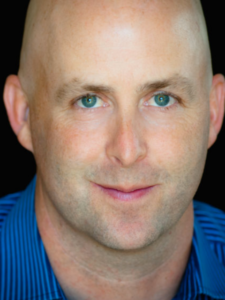
Patrick Durkin is CEO of The Wellness Enterprise, the Structured Water Superstore and an advocate of sacred commerce. His passion and integrity for spreading water’s healing power led him to partner with the Hydration Foundation as the producer and sponsor of the Hydration Solution Summit. His dream is to replace the plastic bottle industry with sustainable solutions and his first book Flow will be released in 2020.
Click Here To Read The Video Transcript
Gina: Patrick is the founder and the CEO and a brilliant thinker of the Wellness Enterprise. And the Wellness Enterprise is the only structured water superstore. So, Patrick, has been in the work of structured water for the longest of anyone I know. I’m so glad I stumbled into his work and saw that he was presenting structured water to the world and presenting products. Products are very important part of this process because we need help, we need smart help, we need an inventive help to recover water from the breakage that putting it through pipes, chemically washing it, all the mistreatment of water that we do, we need to go in the other direction and how we get there has been Patrick’s mission is to bring products that have credibility, validity, that really work, that meet this important need and this urgent need in our world today.
That’s not the reason that I invited him into this interview. The reason is Patrick has a very, very special and unique journey that got him to this moment where we’re together right now. And I am so moved by what he calls ‘sacred commerce’ and how he has come into the presentation of water and why it’s become so important to him. And when he started talking to me about how this happened, I was like “Hold on We got to get that story out into the world” because it’s a story of how anybody starts to want to improve themselves, improve their community, and just doesn’t know where to go and what to do. So, I love that he’s going to take us from there to where we are now.
So, Patrick, share with us how it is you came to open a structured water superstore and the Wellness Enterprise and what it is and what the heck happened to you?
Patrick: Thank you for asking it that way, Gina. While you were unfolding that, I was thinking back to the first moment of knowing that this journey has started and it was pretty unconscious but it’s actually when I was in college and they had all these recycling bins at the ends of the halls in the dorm and we put our cans and bottles in there and I was like “Where do those go like what happens with those?” And my curiosity about that led me to become the chairman of the recycling committee in Hingham, Massachusetts. And while I was the chairman of the recycling committee, I was a successful financial advisor. And I would say that in my early 30s I won the American dream. So, I was married, four kids, I drove a Porsche, I made a million dollars in a year, everything looked like it should be perfect. And yet I woke up every day with fear in my heart. I was scared. I always felt like I wasn’t enough. I lived more in terror than anything else, although the outside trappings looked good. And that curiosity about where the contents of those bins went and then the position of the chairman of the committee, I ended up starting a project in my town to get rid of plastic water bottles. And what I started doing was we used the recycling committee to put infrastructure at the libraries and the schools and the fields to give people a place to put their bottles. And it was like a two-year project. There’s so much bureaucratic red tape against change, right? It’s just not easy to wave a wand and create change in the world.
So, it took two years to put in a bunch of bins. And when we put them in, I would say there was a moment right after that where I was beginning to hear a guidance from a part of myself that I now can take one breath and connect with but back then it was like the first awakenings of it. And what I felt was I saw the bins get installed and I felt my heart break. I was so sad like this two-year project and when I went to like view the bins and I thought nothing but sadness. I went back to the next committee meeting and I said “I don’t want to give people a reason to feel good about using a plastic water bottle. I want to give them a reason not to ever want to use a bottle again. Does anybody want to embark with me on a transformation project?” And the whole committee said no and I resigned. That was it. I was like “I’m not going to do this working within the system this way anymore to make people feel good about having plastic bottles. I’m going to get rid of plastic bottles.”
And so, I started being more open to change and I started going to these Secrets of the Millionaire Mind workshops and I’d be in a room of 500 people and people would have the chance to stand up and I would get called by this energy to stand up and I’d tell them I was working on a project to get rid of plastic bottles. And they encouraged me with a love and a support and an inspiration that I had never known before and I think “Wow!” And what started to happen as I educated myself about the oceans and the trash gyres and the way wind and current bring plastics together and those plastics degrade and they go into our fish and then they go into our water like now we have micro-particles in our water. So, the plastic that we’re all unconscious about, well, not everybody, but we as a species were unconscious about, it goes somewhere and it degrades into something and it ends up back in us.
So, I started to simultaneously be encouraged by the inspiration of people while noticing the way I felt a connection to the ocean and the fish and the food system. And what I would say is a journey to get rid of plastic water bottles ended up unfolding a journey of oneness and flow. I just thought I was getting rid of plastic bottles when I started, right? And then this stuff started to happen to me where I realized I had to learn about the quality of water like if I was going to get somebody to not choose a plastic bottle, I had to give them a choice that when they saw it, it would be so much better than what they were doing before that they would change their behavior, they would give up convenience, they would give up a myopic view of life, and they would say “Oh, this is much better.”
And so, I learned about a lot of different types of water and water filters and alkaline water and all this different stuff. And then I learned about structured water. And I learned you could change the physics of water and so the chemistry of water, right? When water changed with physics, then it seemed to mimic nature better, it seemed to be alive and vibrant. I’m not a scientist by thinking. It’s not how I think, which is one of the reasons I’m so thankful for the Hydration Foundation and why we’ve been such a big supporter of the Hydration Foundation is you do think like a scientist. And so, the marriage of thinking like a scientist and thinking the way I do is perfect. It helps to move the mission together. It’s such a good compliment what we do.
So, one of the things that that happened is I got interviewed in 2013 on a show that got broadcast all over the world and people started calling me up to talk about structured water. And it was so exciting. I couldn’t believe it. I remember a call that I had with a woman on video, and she was in Ghana.
Gina: Oh my God!
Patrick: And then another one in Australia. And I realized that the woman in Ghana and the woman in Australia thought and talked with the same concerns and same worries like how did that happen like how did all these people on these different continents approach water in the same way. And then I started to get philosophical and I started to get connected to the energy of water. And so, for me now, all the way from there to here, one breath and a tiny bit of focus is enough for me to settle in my energy field and feel that connection and feel guided by what I’m supposed to do next. That was not a predictable outcome of this journey.
So, I noticed that people were conditioned to have fear about water. And ironically, the two most common things that they would fear were chlorine and fluoride, which man puts in water. So, that started to get me to notice that the way we’re all caused to think about issues is somewhat done on purpose, that it causes industries to exist. Out of all that fear about chlorine and fluoride exists these industries that sell all these water filters.
So, I just kept opening the door and opening the door and opening the door. And at the beginning of this journey, it was not predictable that I would become the meditator that I am or that I would feel a sense of oneness that I would do or that my heart’s desire and passion would be so palpable or that my emotions would be so steady. One of my shocking changes in my life, I’ve always been an emotional guy, and to be honest with you, before age, I don’t know, 32 the predominant emotion was anger. It’s like just whatever happened to me in my childhood or didn’t happen, the reasons or excuses, I just would get angry a lot and I would have to go for a 7-mile run to burn that anger.
Gina: Right. There’s a lot to be angry about, Patrick. There’s a lot to be angry about. And our dream is that, again, I referred to earlier, the fire and using that anger to move into holy action, it’s a perfect ignition. It’s correct.
Patrick: I’m so glad you reminded me of that because these things have become so natural for me, I forget. So, to finish the point I was making and then I’ll amplify the one that you just touched on, one thing I noticed is that if I stay hydrated, my emotions stay steady.
Gina: Oh, that is so true.
Patrick: It’s so amazing. And so, I basically know that my experience of life now is I’m a loving joyous guy. And if I start to fall away from that, no matter what’s happening in my field around me, there’s almost always dehydration happening at the same time. And it doesn’t take many hours. It can be 6 or 12 hours of just not paying attention, not drinking. So, as I had that experience of coming to know myself as more steady, more loving more joyous, when the anger would come up, I started to use it completely differently. And I actually came to like my anger because the anger is fire. And I get the goosebumps in my kidneys when I share that with you, right? So, if I can take that anger when it comes up about something unjust, and when I say unjust, my thought process about making it an assessment, I don’t really like to use the word ‘judgment’ anymore but I’m sure I still judge, but if I’m assessing something, I’m thinking about the you, that’s the other party or parties involved, the earth, the me, and all of that as one and watch the evolution of that that has us all become more loving and joyous. That’s my priority mechanism. So, when something occurs as unjust, it’s like, I guess, people being unconscious about using plastic water bottles and not knowing that that was marketed into them and that they have an option, right? And so, whatever fuels anger in me now, I’m now able to shift it and it feels like rocket fuel. And I can work for days like wake up in the morning and work until I fall asleep at night because I’m fueled by that rocket fuel and I’m using it to create, to generate a different future for us. So, these are the types of things that have happened for me on this journey. The talk today about the plastic water bottles is just the tip of the iceberg. I thought I was going to get rid of plastic water bottles and what I got was emotional stability, oneness, a palpable sense of love, connection to inspiration, connection to the spirit of water, right vocation, contribution, and now, loving friendships. I didn’t know loving friendships until the last few years. Now I really know that and I’m just astounded by how much I care about other human beings and what we can do when we come together with similar intent. So, that’s become the context of my life. And I tell you it takes about three days to extinguish it if I let go of my habits. And I’ve experimented with it. It’s like I immersed my life in structured water and I made some really strong decisions. I didn’t have a sip of alcohol for four and a half years. And I didn’t know what was playing out there but what was playing out was I had to eliminate distractions. I had to get just so quiet that it was like me and water. The ocean is right there. It’s 100 yards away. Gina has visited me at my home, everybody, and she knows the ocean is right there. And the waves are rolling all the time and there’s a beautiful beach and I can just go to water and be in nature with water and when it’s cold and I don’t want to go there, well, I can turn on a faucet in my house and have that similar experience by having devices that spin it. So, I just learned to turn things over to the energy of water and to bask in that relationship and to steer my life from there.
Gina: There is wisdom in water. There’s no doubt. We just finished an interview with John Stewart Reid who is an acoustic physicist and does water research on sound and vibration. And it’s a science way to say water talks to us. Water talks to everything we touch. Water talks to all incoming information. Water talks to particles that are coming into you and organizes that conversation to be a benefit to you and then vibrates that through your system, through yourselves, and through your tissues. It’s just an incredible conversation.
Patrick: I remember I went to a workshop, a very spiritual workshop, and Hope Fitzgerald who, I think, is also in the summit, Hope Fitzgerald sent me home with a homework assignment which was to talk to water. And it was like “I cannot get it.” I mean, I just didn’t even know how to begin unfolding that. And one day something was going on in here that I was kind of frustrated about and I went for a walk on the beach and while I was walking on the beach, I remembered Hope’s homework assignment. I was like “Oh, talk to water.” So, I said “All right, water,” kind of “show me” and I was like “Well, here I am. My intention’s open” like “Show me how do we talk.” And I looked at the ocean and this wave broke from both sides at the same time and it met in the middle. And it was like instantly like “Oh, take the middle ground on this issue.” And I got it and that started the conversation. Talking to water is like it’s in the backdrop for all of us. We’re just not at all used to attributing it to it and we don’t know how to look for it. So, I’ve been shown very clearly how to open the store. So, in my first year of using structured water devices in my garden, I needed to see that they work. And so, what I was gifted with was 11 to 12-foot tall corn. There’s a farm down the street and their corn was like this much shorter than mine. I was like “Okay, that’s impressive.” And then my tomatoes and other plants, they grew so much so bountifully that I opened a stand on the side of my yard and sold the extra produce to my neighbors because my family couldn’t possibly keep up with eating how much was being produced. So, that was what I needed the first year.
Then in, I think, it was the third year, I usually go away the end of June and early July, and I came home on July 10 and there was not a single piece of kale on any of the 60 plants that had come up out of the ground. They were all twigs. And there were a bunch of fat rabbits around the yard just having such a good time. And I was furious. I had anger. I have a lot of firewood around the property because I burn from my heat in the winter. And I took firewood and I put it around the outer edge of the garden where the kale was as a fence to protect it. And while doing that, I hurt my lower back and I filled my kidneys with cortisol and I had like all this adrenaline going and I was angry at the rabbits and then I started to look up at the universe and evoke my anger. And then I just tried to laugh at myself. I just burst out laughing. I was like “Dude, if you want kale, just go down to the market, spend 3 dollars and 49 cents and skip the cortisol, right?” There’s a much easier way to do this. Ironically, that opened up communing with the animal kingdom. And so, since opening that up, I noticed red tail hawks in my life. They’re my animal Totem and they give me messages all the time. And it’s been maybe five or six years now of exploring in this area. I’ve had an emotional release session that I was doing with my hand across a couch and a spider came and walked up onto my finger while I was doing it. I’ve been in Sedona, Arizona, with a friend. And while we were doing some emotional stuff had a lizard come up and crawl onto his leg and have these animals deliver messages. One day when I ignored a hawk two days in a row, the third time a hawk went crashing into my Holly bush at like 8 o’clock in the morning. I’m like “Don’t hurt yourself. I’ll pay attention” like “I’m sorry that I didn’t listen the last two days.” So, I’ve learned that my relationship with water, keeping myself hydrated, keeping myself flowing opens up communion with the animal kingdom, with the plant kingdom, with the humans with a sense of oneness with my heart. And, as I was saying before, it only takes about three days to dry it up. If I don’t tend to my living water needs for about three days, I will get dehydrated, and my third eye and my sense of my crown chakra and the energetics that are with me all the time will be gone. It will be inaccessible and I will need to re-immerse to do it. So, I’ve learned that that’s a higher price than I’m willing to pay. And very rarely do I take my eye off the ball, just why I’ll drink during our interview.
Gina: I do think that the we are so used to thinking of ourselves, Patrick, as a bounded entity and now we have the Heart-Math Institute and we have other people saying “No, no, no, no, your energetic magnetism and your electromagnetic fields actually supersede your physical container.” And I think what is really coming into people’s awareness now is the idea that actually those fields interact with other fields that are living as well, all conducted by water, by hydration, so that we actually, by becoming hydrated with living water, not water that’s missing charge but water that actually has the electrical signaling that allows us to hear, as the indigenous have said hear plants talk to us here, hear animals talk to us. It’s so crazy but it’s now got a mechanism that we can actually follow out.
Patrick: I have a plant right over here that was in this house for about seven years when I invited my friend Marianne, who’s really good with plants, over and I said “All right, I want to clean things up around here. What do we do with each of these?” And she said “Well, with that one, take it out of the nice pot. Put it into something plastic. Give it to me and I’ll take it to the dump and somebody will adopt it.” I was like “Okay.” I have neglected it so badly that I didn’t even do that. And so, I neglected it past that point. And about six weeks later, for the first time in its time in my house, it blossomed these amazing flowers. And I was like “Oh, you heard me. I didn’t know you heard. I apologize.” And I started taking better care of the plant. It hasn’t flowered again, except that year. So, maybe I’m going to threaten you again.
So, I’ve just learned so many of those things. I had a conversation about giving my dog up. And I was just talking to my daughter on the phone. He was right by my side. He got up and walked out of the room and wouldn’t look at me for 24 hours. I mean, you got to be kidding. And something happened like that twice with him. So, you start to see these things change before your eyes and then you start to realize that that emotional stability that I’m feeling and that intention to be loving, fueled with the water, starts to lead to different cycles and different rhythms. So, my circadian rhythms are much different and better now. I will sometimes get up and walk outside barefoot and stand on the dirt and look at the sun, at the beginning of the day, and any day that I do that, that night I feel so tired and want to go to bed early because I come into alignment with the rhythms. So, I’ve separated this down, Gina, into a pretty simple structure to help me with, which is something coherent and bringing me more into alignment with myself or it’s something chaotic. That’s it. And all I want to do is a word choice. We know from Dr. Emoto’s work the impact of words but do we really know what that means in our practical daily lives? Well, I noticed that I can feel words. And so, I’ll notice a word choice makes me more anxious or invokes an energy field that I’m not really interested in. And I’ll intend to cease using that. I don’t like the word ‘cease’. I’ll intend to allow that to drop out of my life. I don’t know if you feel the difference there but it’s more gentle to let it drop out of my life than to cease, like that’s a ceasefire kind of connotation.
So, yeah, these energy fields are all connected. And what I found is, now that I’m aware of this, I’m just steering towards harmony and I use chaos as like a bumper car. It’s like “Oh, there’s chaos. Where’s the harmony?” And it’s not that feeling chaos is a problem or that having chaos is a problem. It takes both sides. It’s just that when I notice it “Well, I want harmony again.” And so, I keep moving life toward more and more harmony. And my dream is that my influence … When I wanted to get rid of plastic water bottles, I actually wanted to go all the way to world peace. That was like the full range of where I thought you got to go. And I looked at my phone and I’m like “Well, I don’t have any world leader’s phone numbers in here.” So, causing world peace directly is probably going to be a little bit out of my range. So, what can I do? Well, what if I could assist everyone who is in this phone to choose to have a new story about water, to have a reverence for water, to consider water as a partner and an ally, to consider that they would never put water in a plastic bottle, and that all the plastic bottles would just sit on the shelves in the stores and the trucks would have nowhere to unload to because nobody would do it. What if I did that? So, that’s my dream is to keep building my circle of influence so that I reach more and more people with a stronger and stronger message so that those people here “Hey, there’s a lot of love and joy available for me personally by making a little shift that provides oneness as a connection for my life, water as a living part of that, and that I move toward harmony with that and I keep allowing chaos to be somebody else’s experience.” And so, I’m actually taking action toward causing world peace. I’m just doing it in the way that is the most powerful way I know how to.
Gina: I think using water as the secret influencer in the room is pretty damn important.
Patrick: Well, that’s one of my favorite things is that I’ve come to trust. We’re a commerce company. We sell things. And sometimes when people engage with the company, they’ll bring a whole bunch of emotion to it. It just is how some consumers are and that’s okay. What I love is that I know when we ship something out to somebody who was strongly emotional, whether they were or they weren’t, who bought from us, that when we ship something out to them, we’re sending them something that’s going to have awakened water in their lives and water that’s been energized by physics and that that water is going to be inside of them doing the work. So, I don’t have to feel like I’m on my own doing things. I can feel like water is going to take care of this. And that’s a great relief.
Gina: Patrick, I want to ask you what sacred commerce is. I’ve heard you use this term. I find it a very attractive term. I feel it has a real need in the world. We’re so distrustful of companies and commerce. And yet commerce has the word ‘community’ right in it. I think you’re reviving thinking and understanding it. I would like to ask you what sacred commerce means to you and how the Wellness Enterprise expresses it through that?
Patrick: That’s a topic that’s near and dear. I’d be happy to talk about that. What sacred commerce looks like is that when we begin working, although it’s more like play than work, when we begin engaging in our commerce, in our vocation at the beginning of the day, we notice whether we’re flowing in harmony and things are productive or we’re grinding and things are coming to a halt. And we have little understandings like if who you show up as to do your contribution for the day is disconnected brain fog, confused, angry, those things, you will get sent home. And that includes me. I’ve been sent home. So, we show up for each other inside of the company as I’m only going to listen to you as your greatness. And if I experience you as being off from that greatness, I’m going to talk to you about it directly. We’re going to uncover what’s there and we’re going to resume work. And if we can’t, you’re going to take some time off. And that’s the beginning for how we relate to each other inside the company.
In 2012, I think, a woman worked with me for a while and she said “You are going to write and speak that you support others in every sentence in every way until the entire world knows it’s true and then you’re going to keep saying it after that.” I was like “Wow! Okay.” I didn’t really understand what that meant but I began signing my emails with “Infinite Love and Support.” And I now know what it is to fulfill on that promise. And so, what it is, is to listen to consumers about the difference that engaging in commerce with our company does in their lives like how does it impact them and adjusting so that the substantial like almost everybody, majority, there are a few people who really just want to fight and you just have to let them fight and that’s a way of loving them but almost everybody else can be harmonized. And so, we adapt our policies and our ways of engagement to that harmony with people. And so, what we’re listening for is how do we be in commerce such that enough money flows through the engine to keep it in existence so that it can further what it does in the world. And one of the things that is wonderful about the dream of the Hydration Foundation, your nonprofit, is your view of hydrating people in the planet together. And the way you bring that together, that inspires the Wellness Enterprise. The call of the force of water that comes through me, here’s that and it’s like “Well, that’s a way to get a lot of palpable oneness going.” So, we’re really inspired to support that. So, sacred commerce, to me, as the sole shareholder of this company, means having enough resources come through the company that the people that are associated with it are stable in their lives and that everybody’s okay. And then once everybody’s okay, then what impact can we cause in the world? So, we’re not cultivating a corporation so that it can be have a liquidity event someday, right? I think that’s an aspect of what sacred commerce is not. It’s like the corporations have become something in the world where they’re entities that are more powerful than countries. And so, I’ve come to understand that we can nurture an entity, a corporation to fulfill a purpose and that as long as that purpose exists, the corporation’s reason for existing continues but if that purpose gets fulfilled, then I don’t want to make the vehicle adapt to make more profit and keep going. Just fold the vehicle and make a new vehicle to address a new area of life. So, we’ll see how this goes.
My first book is about to come out. It’s called Flow. And it has a lot to do with immersing one’s life in water and getting the emotional flow and the stability that comes from kind of letting go of some of the hard things that people fixate on too much and getting more in the flow. And as that’s about to be published, I already see the next two books and have started outlining them. the second one will be about redefining what a self is and that self will be a connected self, inside of this context of oneness. And then the third book is redefining what success is. And so, success for me is not making a million dollars in a year. Success is feeling my passion and purpose and being able to constantly and authentically narrow the path I walk on so that I’m walking passion and purpose. And I know when I’m doing it because when I’m doing it, it catalyzes others into their truth. And so, I see our species like a jigsaw puzzle and I’m just one of the little pieces and I’m just doing my best to paint that piece the best way that it ever could have been painted. And that probably means like sanding it and repainting it often just …
Gina: You have to get involved.
Patrick: Right. It’s like painting the Golden Gate Bridge in San Francisco. They never stopped painting it. They go to one end and then they start back at the other. And so, I’m going to keep painting my piece. And while I’m painting my piece, I’m going to do whatever I can to support others to be their piece in the best way that they can. And, for me, when I give up thinking that being my peace comes from my mind or that I have to think it up or I have to do it but actually that I allow it and that I be it and that life brings it through me, all the pressure’s off, right? The only thing I have to do is tune to hear. And it’s actually not tuning with the ears. It’s more tuning with the heart and tuning with the crown chakra and the third eye but all I have to do is tune and listen and allow. And then it shows up a thousand times better than I could have dreamed it into existence from my mind.
Gina: Yeah, thinking is a very limited form of information. It’s a very vital one in our world because we’re all trained to the rewards with the thinking and rational and that’s the language we speak. And that’s why science has been important. We want to speak the language that people in need can understand. So, starting with science has been important for me. I’ll say what we’re really trying to do here, Patrick, is a movement. We’re really trying to open up a movement together. And this is so much why I wanted you to be on the summit and feel that it would help people really see “Oh, what they’re asking is that we use water together to restore and replenish ourselves, to restore and replenish our land. Our mother earth is desperately in need of the right kind of water, recovered water, water that isn’t contaminated to recover our corporations that they can be a medium for amazing grace instead of our usual thinking of just buy low, sell high, hurt the party you’re engaging instead of lifting each other together and thinking of water literally as currency, that we bring that value to each other is amazing.”
Patrick: I could give people a little bit of a nudge about how to go toward that. So, just notice what happens if you walk on the beach with all those waves moving. Is it easy to stay in a bad mood if you do that or do you feel a little more harmonized? I think, most everybody would agree they feel a little more harmonized. So, my business is the is the commerce of structured water devices. So, I don’t want to be self-serving about that. I want to be inviting and awakening the energy of that. So, go get it at a beach or do what I did. I went to Niagara Falls and I would consider that like one of the biggest water structuring devices in the world. It was the fourth day and I hadn’t had a breakthrough or a story. And I was like “What is wrong? Come on, water. I’m here.” And I hear “Go for a walk.” I’m like “All right.” So, I go for a walk and I go out past all the people and past the falls and I get pretty far away from it and I turn around and I look back and I see a rainbow over the falls. And I get the knowing. I’m like “Okay, the story is here.” And I turn around and I start walking back. And I’m back to where the people are and I was like “I got nothing here” like “What’s the story?” And then there’s all these people from all over the world. And if you look at people in groups at a place like that, there’ll be a whole bunch of Asian people together, there’ll be a bunch of teenagers and families and you can kind of see all the different interests and groups that are there. And as I started walking through the people, I felt drawn to look into their faces and I had this sense of love for them that I hadn’t had before. And I was like “Okay, I got it” like “In the presence of this much structured water, what I get is love.” And so, I want to invite people who don’t know what a structured water device is to just go into nature and just be with nature’s instruction. And I want to invite people to pray over their water. If what you got is the opportunity to just bless your water and just cultivate an intention of reverence between you and water just that you honor it and consider that it connects everything and that it’s here to support you, that’s great too. And so, we can do all these different things just in the natural world. We can we can sprinkle some charged sea salt, some good mineral sea salt into our water and help lift the charge up that way. So, there are a lot of ways to do it that are really simple. And everybody, if you could just consider, just consider, I’m not saying this is true for anybody, but just consider the possibility that water is here to guide us, that water is actually assuring us in our evolution to become more loving and more joyful and to live lives that we’re thrilled with, as the millions of us and the billions of us gather around this reverence, I believe that will be the way we take the chaotic expressions of so many things that are in our society and we dissolve them because in the space of the love we cultivate for ourselves and with the water, those things just lose their power because they don’t have any energy feeding them anymore. I mean, picture how easy it is to get rid of the plastic water bottle industry. If everybody stopped today buying plastic bottles, you just stopped, that’s it. It’s that easy. The shelf stays full, the trucks have nowhere to go, the plants have nowhere to put their water onto a truck, everybody starts going back to return to sender, and then we put the water back into the earth and then it’s over. It’s really not that big a deal like we can end the plastic water bottle industry collectively just by billions of us making a unified decision. We have the power to change the world, whether those who make laws and have corporate structures that influence and change things with their worldview, we can change our worldview by choosing harmony and choosing these types of actions. So, my invitation is for people to consider that that might be a backdrop for us and it might be a place where we have the power within each one of us to change the world. And when we choose it together, we’ll see it together.
Gina: That’s perfectly said, Patrick. That is what our efforts here, our collective efforts, all our work together to launch the Hydration Solution Summit because we want people to be better hydrated because we believe they’ll be imbued with wisdom.
Patrick: Yeah. And I just can’t acknowledge you enough for bringing together the idea that real hydration is what people drink but it’s also what they eat and how they move. I had a 28-day fruit cleanse at one point and I noticed during it that I drank about half as much water as I normally getting inside. I don’t know, there is hydrating water inside of fruit. And so, kudos to you for figuring that out, for studying desert communities and finding out that it’s not just what we drink. It’s not eight glasses a day. Thank you for getting that idea out here. And now we’re teaching people what real hydration is. And if we eat more water rich foods, if we move our bodies, if we consume living water that has charge in it and we do all that together, we handle the most important process that’s related to everything else that we do, the hydration process. And where we go from there, I don’t know, but my experience is that 100% or 99 point a high-number percent of people are dehydrated. So, let’s find out what life looks like if we’re hydrated. Let’s start there. Why not
Gina: Let’s start there. And I truly believe, Patrick, that we will do it, not only return ourselves to health but we can return this planet. And for people who are really frightened as we’re so led to feel that there’s nothing we can do, the idea that you start with a glass of water and that that is the first step towards actually recovering climate, renewing aquifers, I mean, the list just goes right down of the impact that could have.
Patrick: When you bring that up and you start to connect it from our personal hydration and then you take it to the land and people start to recognize soil health and that the little critters like all the organisms in the biome of the soil, they are dehydrated too, you start to see how hydration connects the personal and the global, the earth and the body, and we can look at having a reference for water in all of our practices related to our personal health and our planetary health. I think I told you the story, in New York City it’s really hard to go pee. And I don’t relent on my water drinking. And so, I think you knew the name of the bridge but I forgot it, but I was in the middle of one of those bridges and there is nowhere to go to the bathroom and it’s a really, really long bridge. And it was so bad that I literally ran off the bridge to the first building, went to the doorman and I said “Can I please use your bathroom or would you like me to pee on your pulpit here?” It’s like our culture is not structured to make hydration convenient. It’s actually structured to make it inconvenient. And so, when we evoke this desire to be harmonized ourselves, to feel right, to be in love and joy, we’ll change our systems. We’ll change our systems about how we grow food and that’ll change the vitality and the energy of what’s on the shelves and how hydrating that food is. And when the food is more hydrating, we’ll need less water to drink. It’s all connected. We can shift it all and, I think, it’s underway. The first part is awareness and we’ve brought that to it.
Gina: Yes. Patrick Durkin, I’d love you to death. Thank you so much for your work at the Wellness Enterprise. Thank you for bringing the Wellness Enterprise to the rescue of the Hydration Foundation and helping create the Hydration Solution Summit for us, helping to create our link to farmers so that we can now bring structured water devices into agricultural use. We have a direct passthrough where anything that comes into the Hydration Foundation goes to supporting farmers so they can recover their land from dehydration. Really, that’s what the chemical contamination is. It’s a form of dehydration.
So, Patrick, bless you. Thank you for this interview. I look forward to years and years of work with you.
Patrick: Yeah, thank you so much.
Water is the Single Most Powerful Health Intervention We Have
The quality of the water you drink is dependent on its ability to conduct electrical energy.
Thy Hydration Foundation recommends structured water devices from The Wellness Enterprise for restoring the charge to your water.
Special structured water device value packs include:
- lifetime access to the Hydration Solution Summit
- and Hydration Coaching with Gina
This Special offer is available until March 15th, 2020

March 15th, 2020 Live Coaching + Q&A with Gina 8pm Eastern